

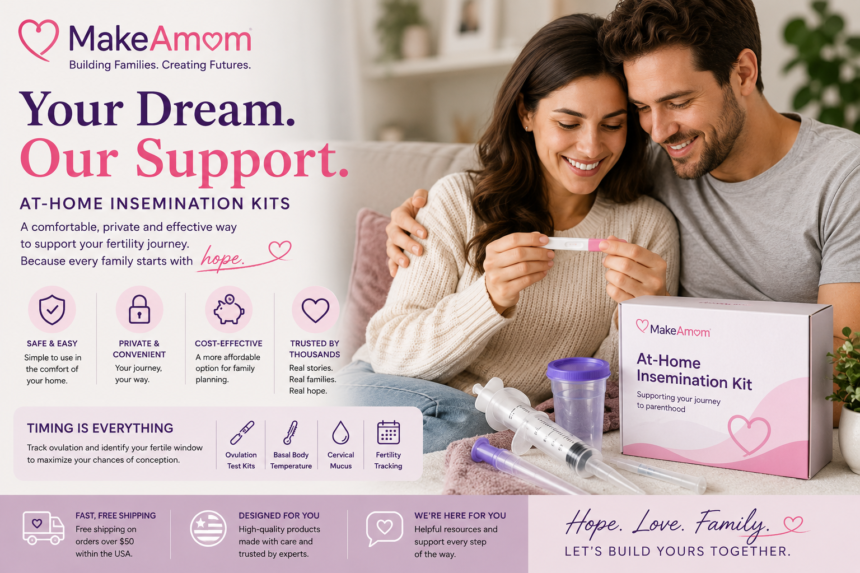
Understanding At-Home Insemination
Starting a family is an exciting journey, but for many individuals and couples, conception may take longer than expected. Today, modern fertility solutions provide more options than ever before, including at-home insemination methods that offer greater privacy, flexibility, and convenience. When used correctly and at the appropriate time during the fertility cycle, these methods may support natural conception efforts. Many people researching fertility options begin by reading resources such as the At home insemination kit to better understand available products, timing, and best practices.
What Is Intracervical Insemination (ICI)?
Intracervical insemination, commonly known as ICI, is one of the most widely discussed at-home fertility methods. The process involves placing sperm near the cervix during the fertile window to increase the chances of fertilization occurring naturally.
ICI has become a popular option for single parents by choice, same-sex couples, and partners experiencing certain fertility challenges. Since the procedure is non-surgical and can often be performed at home, many people appreciate the comfort and privacy it provides.
Understanding how ICI works helps individuals make informed decisions while preparing for conception.
Why Ovulation Tracking Matters
Successful conception depends heavily on timing. Ovulation is the period during which an egg is released and is available for fertilization. Because this fertile window lasts only a short time each month, accurately identifying ovulation significantly improves the likelihood of pregnancy.
Many people monitor ovulation using predictor kits, basal body temperature tracking, fertility apps, or cervical mucus observations. Combining these methods often provides a clearer understanding of the menstrual cycle.
Careful ovulation tracking allows insemination to occur at the most appropriate time.
Benefits of At-Home Insemination
One reason many individuals consider at-home insemination is the convenience it offers. The process can often be completed in a familiar environment without requiring frequent clinic appointments.
Privacy is another important advantage. Some families appreciate being able to manage the process comfortably at home while following carefully designed instructions. At-home insemination kits are also generally designed to be simple to use, making them accessible for many first-time users.
While results vary for every individual, many people find that at-home fertility options provide an additional pathway when planning a family.
Preparing for the Best Possible Results
Preparation plays an important role in any fertility journey. Following product instructions carefully, maintaining good hygiene, and accurately identifying the fertile window all contribute to the process.
Healthy lifestyle habits may also support reproductive health. Eating a balanced diet, staying physically active, managing stress, and getting sufficient sleep help create an environment that supports overall well-being.
Although no method guarantees pregnancy, careful preparation helps maximize each attempt.
Choosing a Quality Insemination Kit
Not all fertility products are identical. When selecting an at-home insemination kit, individuals should consider product quality, ease of use, clear instructions, and customer support.
Reliable manufacturers typically provide educational resources that explain the insemination process while helping users understand proper timing and preparation. Choosing products specifically designed for fertility use also contributes to confidence throughout the experience.
Well-designed kits simplify the process while supporting a more comfortable user experience.
Emotional Support During the Fertility Journey
Trying to conceive can be both exciting and emotionally challenging. Every person’s fertility journey is unique, and it is normal to experience a range of emotions throughout the process.
Open communication between partners, support from trusted family members, or guidance from healthcare professionals can help reduce stress and provide reassurance. Remaining patient and maintaining realistic expectations are important parts of family planning.
Emotional well-being is just as valuable as physical preparation during conception efforts.
Understanding When to Seek Medical Advice
Although many individuals successfully explore at-home fertility options, medical guidance remains valuable in certain situations. Healthcare professionals can evaluate reproductive health, identify possible fertility concerns, and recommend appropriate next steps when pregnancy does not occur after multiple attempts.
Professional advice may also be helpful for individuals with irregular menstrual cycles, known reproductive conditions, or previous fertility challenges.
Combining reliable information with appropriate medical support allows individuals to make informed family-planning decisions.
Learning More About Fertility Options
Educational resources can make the conception process easier to understand. Learning about ovulation, fertility timing, insemination methods, and reproductive health helps individuals approach family planning with greater confidence.
Many prospective parents visit MakeAmom to learn more about at-home insemination kits, ICI techniques, ovulation tracking, and fertility planning before beginning their conception journey.
Access to accurate information empowers individuals to make thoughtful and informed choices.
Building Confidence Throughout the Journey
Family planning is a personal experience that requires patience, preparation, and reliable information. Understanding fertility cycles, selecting quality products, and maintaining healthy habits all contribute to a positive experience.
Every conception journey is unique, and success may require time. Staying informed while following recommended guidance allows individuals to approach each step with greater confidence and optimism.
Many people continue exploring educational resources from makeamom.com to better understand fertility, ovulation, ICI, and the role of at-home insemination in modern family planning.