

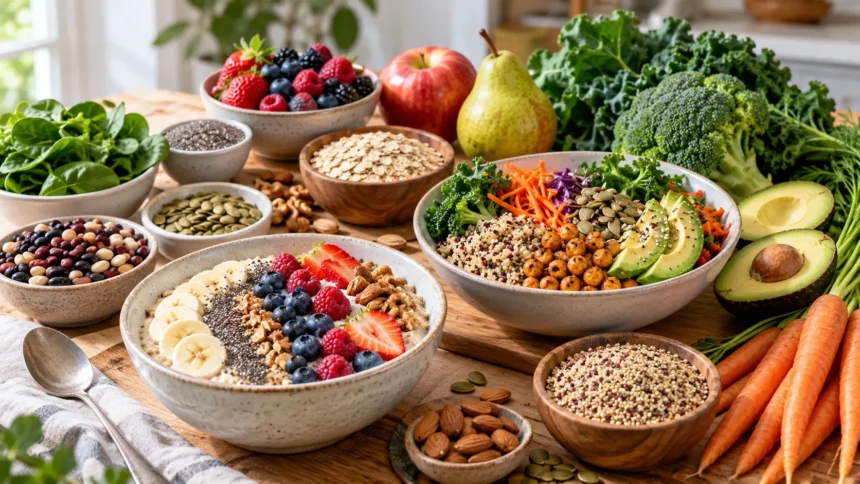
Eating enough fiber is an important part of maintaining a healthy and balanced diet. Dietary fiber supports digestion, helps maintain regular bowel movements, and contributes to overall gut health. However, many people do not include enough fiber-rich foods in their everyday meals, often because they are unfamiliar with the best sources or how to prepare them.
Fortunately, increasing your fiber intake does not require expensive ingredients or complicated meal plans. Everyday foods such as oats, lentils, beans, apples, vegetables, nuts, and whole grains naturally contain dietary fiber. These ingredients also provide vitamins, minerals, and other nutrients that support normal body functions and make meals more satisfying.
Understanding which healthy high-fiber foods to add to your diet can help you make informed nutritional choices. The key is gradually introducing different fiber sources while enjoying a variety of balanced meals. This guide explores nutritious fiber-rich foods, their benefits, and practical ways to include them in your daily eating routine.
What Is Dietary Fiber and Why Is It Important?
Dietary fiber is a type of carbohydrate found mainly in plant-based foods that the human body cannot fully digest. Unlike many other carbohydrates, fiber passes through the digestive system without being completely broken down by digestive enzymes. This characteristic allows it to support normal bowel movements, digestive function, and several other important processes within the body.
Fiber is generally classified into soluble and insoluble types, although many foods contain a combination of both. Soluble fiber can dissolve in water and form a gel-like substance, while insoluble fiber adds bulk to digestive waste. These characteristics influence how different fiber sources interact with digestion, cholesterol levels, and the body’s handling of carbohydrates.
A fiber-rich eating pattern can also support beneficial microorganisms living in the digestive system. Certain fibers are fermented by gut bacteria, producing compounds that contribute to intestinal health. Including different plant foods helps provide a wider variety of fiber types while supporting a nutritious diet containing essential vitamins, minerals, carbohydrates, proteins, and fats.
Oats and Oatmeal for a Fiber-Rich Breakfast
Oats are among the most convenient high-fiber foods to include in your daily routine. They contain soluble fiber known as beta-glucan, which has been studied for its effects on cholesterol levels and digestive health. Oats also supply complex carbohydrates, minerals, and some protein, making them a useful foundation for a balanced breakfast.
Traditional rolled oats, steel-cut oats, and plain instant oats all provide dietary fiber. Their textures and cooking times differ, allowing you to choose whichever variety fits your preferences. When selecting flavored oatmeal products, check the ingredients because some contain substantial amounts of added sugar, while plain varieties offer greater flexibility for personalizing meals.
Prepare oatmeal with milk or a suitable fortified alternative, then add berries, nuts, or sliced fruit. Overnight oats are another convenient option because they can be prepared ahead of time and refrigerated. Combining oats with different nutritious toppings creates a satisfying breakfast that introduces additional fiber, protein, and healthy fats.
Lentils and Beans for Plant-Based Fiber
Lentils and beans are excellent sources of dietary fiber, plant-based protein, and important minerals. Popular varieties include black beans, kidney beans, chickpeas, and red or green lentils. Their combination of fiber and other nutrients makes them useful ingredients for soups, salads, stews, and satisfying meals prepared with familiar everyday foods.
Legumes provide both soluble and insoluble fiber, supporting different aspects of digestive health. They also contain nutrients such as folate, iron, magnesium, and potassium, although amounts vary between varieties. Regularly including beans and lentils in a balanced diet can contribute to heart health and support the body’s normal nutritional requirements.
Add cooked lentils to vegetable soups, mix chickpeas into salads, or serve beans with rice and vegetables. Canned legumes provide a convenient option when cooking time is limited, while dried varieties are often economical. If beans cause digestive discomfort, introduce smaller amounts gradually and increase your intake as your digestive system adjusts.
Apples, Pears, and Berries for Natural Fiber
Whole fruits are convenient sources of dietary fiber that also provide water, vitamins, and beneficial plant compounds. Apples, pears, raspberries, and blackberries are particularly useful options for adding fiber to snacks and meals. Their naturally sweet flavors make them enjoyable without requiring complicated preparation or additional ingredients.
Apples and pears contain pectin, a type of soluble fiber that contributes to their nutritional benefits. Raspberries and blackberries provide substantial dietary fiber relative to many commonly eaten fruits. Eating a variety of fruits also introduces different antioxidants and micronutrients, helping support a balanced eating pattern rather than relying on one particular food.
Enjoy whole fruit as a snack or combine it with yogurt, oatmeal, or nut butter. Keeping edible skins on apples and pears can help preserve some of their fiber content after thorough washing. Whole fruits generally provide more fiber than strained fruit juices, which often contain less of the original fruit’s fibrous material.
Chia Seeds and Flaxseeds for Extra Dietary Fiber
Chia seeds and flaxseeds are small ingredients that provide fiber, healthy fats, and useful minerals. Both are popular additions to breakfast bowls, smoothies, and homemade snacks because they require little preparation. Their nutritional profiles also make them convenient choices for people who want to introduce more plant-based ingredients into everyday meals.
Chia seeds absorb liquid and develop a gel-like texture because of their fiber content. Flaxseeds contain soluble and insoluble fiber along with alpha-linolenic acid, a plant-based omega-3 fatty acid. Ground flaxseed is generally easier for the body to digest than whole flaxseed, which may pass through the digestive system largely unchanged.
Sprinkle a small amount of ground flaxseed over oatmeal or stir chia seeds into yogurt and other moist foods. Chia pudding can be prepared by allowing the seeds to hydrate fully in liquid. Introduce these ingredients gradually, drink adequate fluids, and avoid consuming dry chia seeds by themselves because they expand when exposed to moisture.
Whole Wheat Bread and Brown Rice for Daily Meals
Whole grains provide dietary fiber alongside complex carbohydrates, vitamins, and minerals. Whole wheat bread, brown rice, bulgur, and whole-grain pasta can contribute to a balanced diet when combined with vegetables and protein sources. Unlike refined grains, whole grains retain more of their original grain components, including fiber-containing outer layers.
Brown rice contains the bran and germ that are removed during the production of white rice. Whole wheat products similarly retain more of the original wheat grain than many refined alternatives. However, fiber content varies between products, so checking nutrition labels can help identify options that genuinely provide meaningful amounts of dietary fiber.
Try preparing sandwiches with whole wheat bread or serving brown rice alongside beans, vegetables, and fish. Whole-grain pasta also works well with tomato-based sauces and familiar ingredients. You do not need to replace every refined grain immediately; gradually introducing different whole grains can help you develop enjoyable and sustainable eating habits.
Broccoli, Carrots, and Brussels Sprouts for Fiber
Vegetables are valuable sources of dietary fiber, vitamins, minerals, and naturally occurring plant compounds. Broccoli, carrots, and Brussels sprouts are especially versatile because they can be cooked in several different ways. Including these vegetables in meals contributes to dietary variety while providing nutrients needed for normal growth, maintenance, and overall health.
Broccoli contains fiber along with vitamin C and vitamin K, while carrots provide beta-carotene, which the body can convert into vitamin A. Brussels sprouts offer additional fiber and several beneficial micronutrients. Cooking methods influence flavor and texture, making it easier to enjoy these vegetables according to your personal preferences.
Roast carrots with olive oil and herbs, steam broccoli alongside a main dish, or sauté Brussels sprouts with garlic. Vegetables can also be added to soups, pasta, and rice dishes to increase variety. Combining different colors and textures helps make fiber-rich meals appealing without requiring strict dietary rules or complicated recipes.
Sweet Potatoes and Regular Potatoes With Their Skins
Sweet potatoes and regular potatoes can contribute dietary fiber, particularly when their edible skins are included. Both provide carbohydrates that support everyday energy needs, along with various vitamins and minerals. Their affordability, familiar flavors, and flexible cooking options make them useful ingredients for people looking to create satisfying, nutritious meals.
Sweet potatoes are known for their beta-carotene content, especially varieties with orange flesh. Regular potatoes provide potassium and vitamin C, with nutrient levels depending on the variety and preparation method. Cooking and cooling potatoes can also change some starch into resistant starch, which behaves differently from ordinary digestible carbohydrates.
Baked potatoes can be served with beans, vegetables, yogurt, or other nutritious toppings. Sweet potatoes work well roasted, mashed, or incorporated into soups and stews. Wash the skins thoroughly when keeping them on, and pair potatoes with protein-rich foods and vegetables to create meals offering a broad range of essential nutrients.
Avocados for Fiber and Healthy Fats
Avocados are unique fruits because they provide dietary fiber alongside substantial amounts of unsaturated fat. Their creamy texture makes them useful in sandwiches, salads, and other savory dishes. Avocados also contain nutrients such as potassium, folate, and vitamin K, making them a valuable addition to a varied and balanced eating pattern.
The combination of fiber and fat can help make meals satisfying while contributing important nutrients. Unlike many fruits that contain mostly carbohydrates, avocados have a different nutritional composition. This does not make them inherently better than other fruits, but it allows them to complement foods that provide different vitamins, minerals, and energy sources.
Spread mashed avocado on whole-grain toast or add slices to salads and sandwiches. You can also combine avocado with tomatoes, beans, and lime juice to create a simple topping. Because avocados are relatively energy-dense, enjoy them in amounts that suit your appetite and overall nutritional needs rather than focusing on rigid serving rules.
Nuts and Seeds for Convenient Fiber-Rich Snacks
Nuts and seeds provide fiber, protein, healthy fats, and several essential minerals. Almonds, pistachios, sunflower seeds, and pumpkin seeds can be useful additions to meals and snacks. Their different textures and flavors make it easy to introduce variety while obtaining nutrients that contribute to general health and everyday energy requirements.
Almonds contain fiber, vitamin E, and magnesium, while pistachios provide protein and additional beneficial nutrients. Seeds can contribute minerals such as zinc and phosphorus, although nutritional content differs between varieties. Nuts and seeds are also concentrated sources of energy, which can be helpful for creating satisfying meals and snacks.
Add chopped nuts to oatmeal, sprinkle seeds over salads, or enjoy nut butter with whole-grain toast. Choose varieties that match your taste preferences and dietary requirements, particularly when considering allergies. Combining nuts or seeds with fruit and other fiber-rich foods creates convenient snacks containing different nutrients rather than depending on one ingredient alone.
Barley and Quinoa for Nutritious Whole-Grain Meals
Barley and quinoa are versatile ingredients that can provide fiber and valuable nutrients in everyday meals. Barley is particularly notable for containing beta-glucan, a type of soluble fiber also found in oats. Quinoa supplies dietary fiber, protein, and minerals, making both foods useful alternatives to frequently consumed refined grains.
Barley has a pleasantly chewy texture that works well in soups, grain bowls, and hearty vegetable dishes. Hulled barley generally retains more of its original grain components than pearl barley, which undergoes additional processing. Quinoa cooks relatively quickly and offers a mild flavor that complements vegetables, legumes, herbs, and various protein sources.
Try adding cooked barley to vegetable soup or using quinoa as a base for a colorful salad. Both ingredients can be prepared ahead of time for convenient meals during busy days. Barley contains gluten, while plain quinoa is naturally gluten-free, so choosing appropriate products matters when specific dietary restrictions or medical needs apply.
How to Add More Fiber to Your Diet Safely
Increasing dietary fiber gradually allows your digestive system time to adjust to changes in food intake. Adding large amounts suddenly can cause bloating, gas, or abdominal discomfort, particularly when your usual diet contains relatively little fiber. A slower approach makes it easier to discover which foods you enjoy and tolerate comfortably.
Begin by adding one fiber-rich food to a familiar meal, such as berries with breakfast or beans in a soup. Continue eating a variety of foods that provide protein, fats, carbohydrates, and essential micronutrients. Drinking adequate water is also important because fluid supports the normal movement of dietary fiber through the digestive system.
Pay attention to how your body responds as you introduce different fiber sources. Individual needs vary depending on age, health, and digestive conditions, so a single approach will not suit everyone. If you experience persistent digestive symptoms or have a medical condition affecting your intestines, seek personalized guidance from a qualified healthcare professional.
Conclusion
Healthy high-fiber foods include a wide variety of familiar ingredients such as oats, beans, lentils, berries, vegetables, whole grains, nuts, and seeds. These foods contribute different types of fiber alongside essential nutrients that support overall health. Including a diverse selection in your meals can help maintain normal digestion while making your everyday eating routine more enjoyable.
Adding more fiber does not require complicated recipes, expensive supplements, or unnecessary food restrictions. Simple changes, such as choosing whole grains, adding fruit to breakfast, and including legumes in meals, can increase dietary variety. Introducing these foods gradually and drinking adequate fluids helps support digestive comfort while allowing you to establish consistent habits.
The most effective way to enjoy the benefits of dietary fiber is to focus on balanced meals that suit your individual needs. Choose ingredients you enjoy, experiment with different preparations, and combine fiber-rich foods with other essential nutrients. Over time, these practical habits can contribute to a nourishing eating pattern that supports digestive health and general well-being.
Frequently Asked Questions
What are the best high-fiber foods to eat every day?
Oats, lentils, beans, apples, pears, berries, vegetables, and whole grains are excellent daily fiber sources. Eating a variety helps provide different nutrients and supports balanced nutrition.
Which fruits contain the most dietary fiber?
Raspberries, blackberries, pears, and apples with their skins are useful sources of dietary fiber. Fiber content depends on the fruit type and portion, so variety is beneficial.
Can eating too much fiber cause digestive problems?
Yes, increasing fiber intake too quickly can cause bloating, gas, or abdominal discomfort. Introduce fiber-rich foods gradually and drink adequate water to support digestive comfort.
Are oats and chia seeds good sources of fiber?
Yes, oats contain beta-glucan, a soluble fiber, while chia seeds provide substantial dietary fiber and healthy fats. Both can be incorporated into nutritious breakfasts and snacks.
How can I increase fiber intake without supplements?
Choose whole-grain foods, include beans or lentils in meals, eat whole fruits, and add vegetables regularly. Nuts and seeds can also contribute fiber through familiar snacks and recipes.