

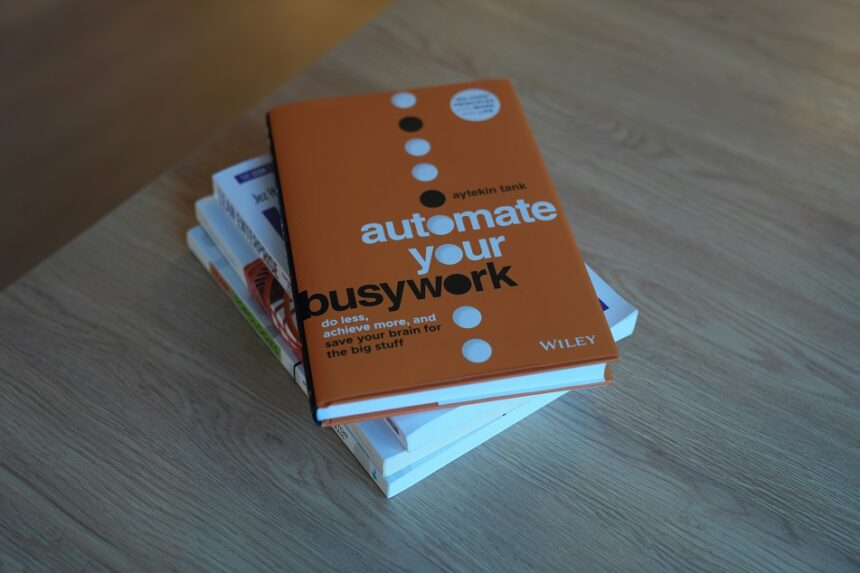
Introduction to Automation in Business
Automation in business refers to the technological process of streamlining or replacing manual tasks with automated systems. This innovation tends to encompass a variety of practices, such as software solutions, robotic process automation, and even artificial intelligence applications. The deployment of automation has emerged as an increasingly vital component for businesses striving to enhance efficiency and reduce operational costs.
The recent advancements in technology have significantly contributed to the growing interest in automation. As organizations face increasing pressure to innovate and improve their workflows, automation offers a compelling solution. Businesses of all sizes are beginning to recognize that adopting automated processes can lead to substantial improvements in productivity, accuracy, and scalability. This transition has opened a new landscape where companies, from startups to large enterprises, can harness the potential of automation.
Moreover, automation helps in minimizing human error, a common challenge in many manual tasks. By delegating repetitive processes to automated systems, companies can ensure greater consistency in their outputs. This is not only beneficial for internal workflow but can also enhance customer satisfaction by speeding up response times and improving the accuracy of service deliveries.
As we delve deeper into the surrounding benefits of automation in various sectors, it becomes clear that this technological shift is not merely a trend, but a fundamental realignment of how businesses operate. Embracing automation can empower organizations to reallocate human resources to more strategic functions, ultimately fostering growth and innovation in an increasingly competitive marketplace. The landscape is evolving, and those who adapt to this change are likely to thrive amidst the challenges presented in today’s business climate.
Increased Efficiency and Productivity
The integration of automation in business operations has become a pivotal strategy for enhancing both efficiency and productivity. By automating routine tasks, companies can significantly reduce the time and resources expended on manual processes. Routine activities such as data entry, invoice processing, and employee onboarding are just a few examples of tasks that can seamlessly transition to automated systems. This shift not only accelerates overall workflow but also minimizes human errors that can occur in repetitive manual tasks.
Consider the implementation of customer relationship management (CRM) software, which can automate the process of customer data collection, analysis, and follow-up communications. This allows sales teams to concentrate on nurturing relationships with potential clients, rather than getting bogged down in data management. Similarly, automated inventory management systems can monitor stock levels, reorder products when necessary, and provide real-time data insights. This drastically reduces the time spent on inventory checks and order placements, optimizing the supply chain process.
Additionally, automation enhances productivity by enabling employees to focus on higher-value activities that require critical thinking and creativity. For instance, automated reporting tools can consolidate data and generate reports swiftly, freeing up valuable time for business analysis and strategic planning. By redirecting their efforts towards more impactful tasks, employees can contribute to driving innovation and improving the overall performance of the business.
In summary, incorporating automation into various business processes not only streamlines operations but also empowers employees to engage in strategic initiatives that contribute to the organization’s growth. With greater efficiency and enhanced productivity as key benefits, automation presents a future-focused approach that is crucial for businesses aiming to thrive in a competitive landscape.
Cost Reduction and Financial Benefits
One of the primary advantages of incorporating automation within a business framework is the significant reduction in operational costs. Automating repetitive tasks allows organizations to streamline processes, leading to decreased labor expenses. With automation systems, businesses can minimize the need for extensive human resources in areas such as data entry, customer relationship management, and inventory control. This, in turn, frees up employees to focus on more strategic tasks that directly enhance the company’s revenue potential.
Moreover, automation effectively reduces the likelihood of human error, which can be a costly factor in business operations. Whether it involves data inaccuracies or mishandling of resources, mistakes can lead to financial losses. Automation minimizes these errors by implementing consistent, predefined processes that deliver high accuracy levels. For instance, automated billing systems ensure that invoices are generated correctly and transactions are recorded without discrepancies, ultimately mitigating potential financial setbacks.
Additionally, automation plays a crucial role in optimizing resource allocation. By using automated systems, businesses can better manage their resources, ensuring that they are utilized effectively. This improved allocation leads to lower overhead costs and better inventory management, thus enhancing the overall financial health of the organization. Efficient resource management means businesses can also respond more rapidly to market demands, further ensuring that they do not miss out on potential sales opportunities.
Investing in automation technologies may require an initial financial commitment; however, the long-term savings and efficiency gains often far outweigh these upfront costs. Consequently, organizations that embrace automation are likely to experience substantial financial benefits, paving the way for sustained growth and competitiveness in their respective industries.
Improved Accuracy and Consistency
In the realm of business operations, the integration of automation has emerged as a critical factor in enhancing accuracy and consistency across various processes. Automated systems inherently possess the ability to execute tasks with a degree of precision that is often unattainable through manual efforts. By minimizing human involvement, automation significantly reduces the likelihood of errors that can arise from fatigue, misjudgment, or oversight, which are common in traditional workflows.
One of the significant advantages of automation is its capacity to standardize operations. When processes are automated, they follow a predetermined set of instructions, ensuring that every output remains consistent with the established quality standards. This uniformity is especially beneficial in environments where quality control is paramount, such as manufacturing, data entry, and customer service. A consistent output not only elevates a company’s reliability but also fosters greater customer trust and satisfaction.
Moreover, automated solutions can provide real-time data and analytical insights that enhance decision-making. For instance, in an automated inventory management system, businesses can maintain accurate records of stock levels, order statuses, and forecast future needs without the typical errors associated with manual logging. This not only prevents stockouts or overstock situations but also helps in maintaining a seamless supply chain, thus contributing to overall operational efficiency.
Furthermore, automation enables organizations to maintain a high level of consistency even during peak operational periods. By performing repetitive tasks reliably, automated systems free human employees to focus on more strategic initiatives, which can lead to innovation and business growth. This dual advantage of improved accuracy and operational consistency substantiates the need for businesses to adopt automated technologies in their workflows.
Enhanced Customer Experience
In today’s fast-paced business environment, enhancing customer experience has become a crucial priority for organizations aiming to stay competitive. Automation plays an integral role in achieving this goal by streamlining communication and improving service availability. Tools such as chatbots and automated messaging systems are instrumental in providing customers with timely assistance, which has been shown to significantly boost satisfaction levels.
Chatbots, powered by artificial intelligence, deliver a 24/7 support framework that enables businesses to engage customers outside traditional business hours. This constant availability ensures that queries are addressed almost instantaneously, thereby reducing wait times. Consequently, customers feel valued and understood, as their needs are attended to in real-time. Furthermore, the scalability of automation allows businesses to handle a larger number of customer interactions, which is particularly beneficial during peak periods when demand surges.
Automated responses not only enhance operational efficiency but also cultivate a seamless experience for customers. By predefining responses to common inquiries, businesses can minimize bottlenecks often faced in traditional customer support channels. This approach not only expedites the resolution process but also enables customer service representatives to focus on more complex queries that require human intervention.
Moreover, data-driven insights gathered through automated systems can inform businesses about customer preferences, behaviors, and pain points. Companies can leverage this data to personalize interactions, allowing for tailored marketing strategies and bespoke service offerings that resonate more deeply with individual customers. Such personalization fosters greater loyalty and enhances overall customer relations.
In summary, the integration of automation in customer service fundamentally transforms how businesses interact with their clientele, resulting in improved response times, increased satisfaction, and more personalized experiences. By embracing these technologies, organizations can create a more engaging, efficient, and supportive environment for their customers.
Better Data Management and Analytics
In the contemporary business environment, effective data management is crucial for success. Automation serves as a powerful tool that simplifies the management of large datasets, ensuring accuracy, speed, and efficiency. By deploying advanced software solutions, businesses can automate the processes of data collection, analysis, and reporting, resulting in a more streamlined operation.
Automated data management tools enable companies to collect information from multiple sources without manual input. This capacity reduces the potential for human errors and allows businesses to gather real-time data, enhancing the timeliness of the insights generated. Furthermore, with the influx of data available today, it is critical that organizations utilize automation to sift through this information efficiently. Sophisticated algorithms can analyze vast quantities of data rapidly, identifying trends and patterns that might be overlooked through manual analysis.
Moreover, reporting functions of automated systems provide businesses with visually appealing and easily digestible insights. Data visualization tools transform complex datasets into understandable graphics, enabling decision-makers to grasp essential information at a glance. This visual representation of data promotes informed decision-making based on empirical evidence rather than intuition alone. Additionally, automation facilitates customizable dashboards that allow different departments within an organization to access specific data relevant to their operational needs.
The integration of automation into data management practices not only enhances operational efficiency but also strengthens overall business strategy. By freeing resources from mundane tasks, teams can focus on more strategic initiatives. Consequently, automation becomes indispensable in not only handling data but also in fostering innovation and growth within the business landscape.
Scalability and Flexibility
In the contemporary business landscape, the capacity for scalability and flexibility is paramount for organizations striving for sustained growth and adaptability. Automation serves as a significant enabler in this regard, as it allows businesses to adjust their operations in response to varying market demands without incurring substantial additional costs. By integrating automated systems, companies can streamline workflows, manage resources more efficiently, and quickly scale their operations up or down based on real-time demands.
Automation eliminates the need for exhaustive manual processes, thus reducing the time and labor needed to navigate changes. With automated systems in place, businesses can respond swiftly to peaks in customer demand or unexpected market shifts. This responsiveness is particularly beneficial for companies operating in dynamic industries where consumer preferences and competitive landscapes can change rapidly.
Furthermore, automation solutions are inherently flexible. They can be tailored to meet specific business requirements and can evolve alongside the organization as it grows. For instance, a company can begin with a basic automated system that supports essential functions and then expand its capabilities by integrating advanced features or additional tools as needed. This modularity not only supports current business needs but also accommodates future expansion with minimal disruption.
Moreover, the data gathered from automated processes can provide valuable insights that enable strategists to make informed decisions, fostering a proactive approach to growth. As businesses scale, automated systems facilitate the maintenance of quality and consistency in service delivery, ensuring that expanded operations do not compromise customer satisfaction.
Employee Morale and Job Satisfaction
In recent years, the implementation of automation in various business processes has received significant attention. One of the profound impacts of this technological advancement is its effect on employee morale and job satisfaction. When businesses adopt automation to handle repetitive and mundane tasks, they not only improve efficiency but also foster a more engaging work environment for their employees.
By minimizing the burden of routine tasks, automation allows employees to focus on higher-value activities that require critical thinking, creativity, and problem-solving skills. This shift can lead to greater job fulfillment, as employees experience a sense of purpose in their roles. Consequently, they are likely to feel more valued and invested in their work, fostering a positive workplace atmosphere.
Moreover, automation can provide employees with opportunities for professional growth. As tedious tasks are automated, employees may be encouraged to develop new skills or take on more challenging responsibilities. This upskilling not only enhances their employability but also contributes to the overall growth and stability of the organization. When employees see a path toward career advancement, their job satisfaction tends to rise, reducing turnover rates and fostering loyalty to the company.
Furthermore, an improved work-life balance is another benefit of automation. With less time spent on mundane tasks, employees can allocate their efforts more strategically, leading to increased productivity and, subsequently, job satisfaction. This balance can also reduce stress and burnout, further enhancing morale.
In summary, the integration of automation in business not only streamlines operations but also enhances employee morale and job satisfaction. By liberating individuals from monotonous tasks, businesses can unlock their potential, ultimately benefiting both the employees and the organization as a whole.
Conclusion: The Future of Business Automation
As we have explored throughout this discussion on the benefits of automation in business, it is evident that embracing technology is no longer optional but a necessity for sustainability and growth. Automation offers significant advantages, including enhanced efficiency, reduced operational costs, and improved accuracy, all of which contribute to a company’s bottom line. Moreover, it allows employees to focus on higher-level strategic tasks rather than mundane manual processes.
The landscape of modern business is rapidly evolving, driven by technological advancements. With the increasing availability of sophisticated tools and platforms, businesses have unprecedented access to automation solutions that can cater to their unique needs. This shift towards automation not only boosts productivity but also fosters innovation by freeing up resources that can be allocated to research and development, enabling companies to stay ahead of their competitors.
Looking ahead, it is crucial for organizations to assess how they can integrate automation into their existing operations. This integration should be viewed as a strategic initiative that aligns with the long-term business objectives, ensuring that companies can adapt to the ever-changing market demands. The implementation of automation can facilitate enhanced customer experiences, streamlined supply chains, and improved decision-making processes, ultimately leading to sustained competitive advantage.
In conclusion, the future of business automation appears bright. As technology continues to advance, the potential for automation to transform operations will grow even stronger, paving the way for innovative solutions and practices. Companies willing to embrace these changes will likely find themselves better positioned to meet the challenges of tomorrow’s business environment, reaffirming the importance of automation as a cornerstone of operational excellence.