
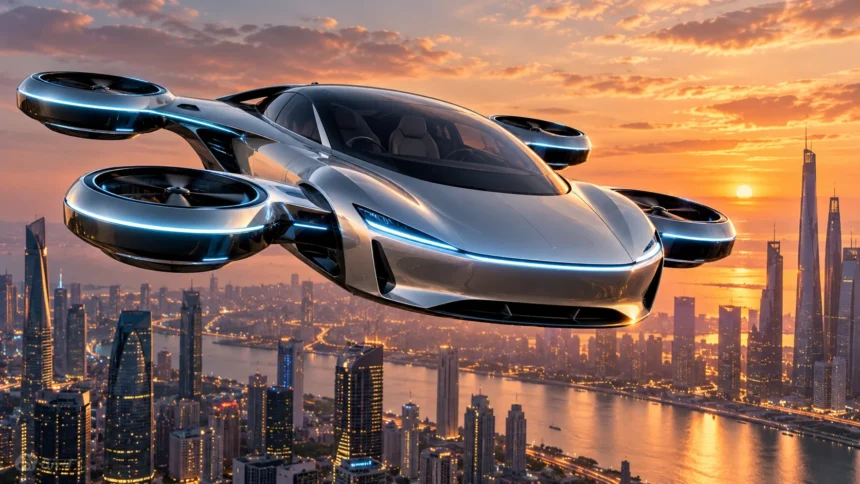
The Tesla flying car has attracted worldwide attention because it combines electric vehicle technology with aerospace engineering. Unlike traditional flying cars designed to operate like small aircraft, Tesla’s Roadster uses powerful thrusters to create short bursts of movement above the ground. This approach introduces exciting possibilities while raising important questions about safety, practicality, and regulations.
However, the Tesla Roadster is not yet a commercially available flying car capable of regular air travel. Its most advanced capabilities have been demonstrated under controlled conditions, and production is currently planned for 2028. This guide explains everything you need to know about Elon Musk’s Tesla flying car, including its features, performance, technology, potential price, and future.
What Is the Tesla Flying Car by Elon Musk?
The Tesla flying car refers to a specially equipped version of the second-generation Tesla Roadster. This electric sports car combines powerful electric motors with aerospace-inspired propulsion technology developed through Tesla’s collaboration with SpaceX. Its advanced design allows the experimental vehicle to perform movements that are not possible with conventional road cars.
Elon Musk introduced the next-generation Roadster concept in 2017, originally presenting it as an extremely fast electric sports car. Over time, the project evolved to include advanced propulsion systems and unusual performance capabilities. The latest demonstration showed how the vehicle could briefly become airborne using specialized technology rather than traditional airplane wings.
Although many people describe it as a flying Tesla, the Roadster is different from a typical flying vehicle. It does not currently demonstrate sustained flight between destinations or regular airborne transportation. Instead, its innovative engineering focuses on extreme acceleration, maneuverability, and short airborne movements that push the boundaries of automotive performance.
When Did Elon Musk Reveal the Tesla Flying Car?
Elon Musk officially demonstrated the latest Tesla Roadster on October 15, 2026, at a SpaceX testing facility in McGregor, Texas. The event introduced a redesigned electric sports car equipped with advanced propulsion technology. Viewers witnessed the vehicle perform remarkable maneuvers that generated significant attention across the automotive and technology industries.
During the demonstration, the Roadster traveled along a curved structure and briefly operated upside down before becoming airborne. It also performed a controlled midair movement and returned to the ground. Another demonstration showed the vehicle using its propulsion system to travel briefly above a lineup of Tesla vehicles.
The presentation represented an important milestone for a project that had experienced several development delays. Tesla originally expected the second-generation Roadster to enter production much earlier, but its timeline changed repeatedly. The October 2026 reveal provided a clearer demonstration of the company’s latest engineering ambitions and its plans for future production.
How Does the Tesla Flying Car Work?
The Tesla flying car uses a specialized propulsion system that produces thrust through highly pressurized gas. Unlike conventional electric vehicles that depend entirely on their wheels for movement, the advanced Roadster can generate additional forces using strategically positioned thrusters. These systems enable brief airborne movements and unusual vehicle maneuvers under controlled conditions.
The vehicle also features a sophisticated fan-based suction system designed to increase contact with driving surfaces. By creating strong downward forces, this technology can improve traction and help the Roadster maintain stability during extreme driving demonstrations. Tesla showcased this capability when the vehicle traveled along an inverted curved structure.
However, producing brief airborne movements is different from achieving sustained, controlled flight. A practical flying car must remain stable in the air, navigate safely, and operate reliably across different conditions. Tesla has demonstrated an unusual propulsion concept, but everyday airborne transportation would require additional engineering, testing, and regulatory approval.
What Are the Main Features of the Tesla Flying Car?
One of the most remarkable features of the Tesla Roadster is its combination of electric performance and aerospace technology. The vehicle uses powerful electric propulsion for conventional driving while selected experimental configurations include additional thrusters. This combination allows Tesla to explore acceleration and maneuverability beyond what traditional road vehicles normally achieve.
Another notable feature is the vehicle’s advanced aerodynamic design and innovative traction technology. The Roadster includes systems intended to improve stability during demanding driving conditions, including its fan-assisted suction mechanism. Its futuristic exterior also reflects Tesla’s focus on streamlined design, performance engineering, and advanced electric vehicle development.
The Roadster is expected to be offered in different configurations, with the most extreme technology limited to specialized versions. Not every version will include the same propulsion equipment or airborne capabilities. The precise features available to future customers will depend on production decisions, safety requirements, and approval from relevant authorities.
How Fast Can the Tesla Flying Car Go?
Speed is one of the biggest attractions of the new Tesla Roadster. During its October 2026 demonstration, Tesla presented performance figures showing acceleration from zero to 60 miles per hour in approximately 0.81 seconds. This remarkable claim highlights the company’s efforts to develop one of the fastest accelerating electric sports cars ever demonstrated.
Tesla has also described ambitious maximum-speed capabilities for its next-generation Roadster. Reports surrounding the latest demonstration indicate a claimed top speed exceeding 230 miles per hour for certain configurations. However, these figures should be understood as manufacturer claims until production vehicles undergo comprehensive independent performance testing.
The Roadster’s extreme performance relies on a combination of powerful electric motors, advanced vehicle engineering, and specialized propulsion technology. Acceleration figures achieved during demonstrations may not represent ordinary driving conditions or standard production models. Real-world performance will also depend on vehicle configuration, tires, road conditions, safety systems, and regulatory restrictions.
What Is the Role of SpaceX in Tesla Flying Car Technology?
SpaceX plays an important role in the development of the Tesla Roadster’s unusual propulsion capabilities. Elon Musk leads both Tesla and SpaceX, creating opportunities for engineers to explore technologies across the automotive and aerospace industries. The flying Roadster demonstration highlights how aerospace concepts can influence experimental electric vehicle engineering.
The vehicle’s propulsion system uses high-pressure gas technology rather than conventional rocket fuel. This approach enables the Roadster to produce short bursts of thrust for unusual movements and additional acceleration. SpaceX’s experience with advanced propulsion engineering has helped shape the development of these experimental features.
The collaboration also demonstrates how technologies developed for one industry can inspire innovations in another. However, producing a road vehicle presents different requirements from developing spacecraft or rockets. Tesla must consider passenger protection, reliability, manufacturing costs, and public safety before introducing such systems into vehicles intended for customers.
How Much Will the Tesla Flying Car Cost?
The expected price of the Tesla flying car depends on the Roadster configuration and the advanced features included. Early discussions around the second-generation Roadster suggested prices beginning near $200,000. However, final pricing for the redesigned vehicle has not been fully established, and different configurations may carry significantly different costs.
The most advanced Rocket configuration is expected to be considerably more exclusive than the standard performance model. Reports following the October 2026 unveiling indicated substantial reservation deposits for certain specialized versions. The Rocket model, which includes the most unusual airborne capabilities, has been described as available only through invitations.
Potential buyers should distinguish between advertised deposits, estimated vehicle prices, and confirmed purchase costs. A reservation does not necessarily guarantee a specific delivery date or final price. Manufacturing expenses, available technology, regulations, and Tesla’s future product decisions could all influence the eventual cost of production Roadsters.
When Will the Tesla Flying Car Be Released?
According to Elon Musk’s latest announcement, Tesla plans to begin production of the second-generation Roadster in 2028. This timeline follows several earlier delays and represents the company’s newest publicly discussed production target. However, an expected production year should not be confused with a confirmed date when customers can receive vehicles.
Tesla first unveiled the second-generation Roadster concept in November 2017, initially targeting production around 2020. Since then, the project has undergone years of development and changing priorities. The latest reveal offered a more detailed look at its technology, although important manufacturing and delivery questions remain unanswered.
Even if Roadster production begins in 2028, the flying-capable configuration may face additional restrictions and availability limitations. Specialized propulsion systems require extensive safety considerations, and existing transportation rules may prevent certain features from being used on public roads. Therefore, widespread commercial availability remains uncertain despite Tesla’s ambitious plans.
Is the Tesla Flying Car Safe for Public Roads?
Safety remains one of the most important questions surrounding Tesla’s flying Roadster. Vehicles capable of leaving the road surface introduce additional risks that conventional sports cars do not normally face. Engineers must consider propulsion reliability, vehicle stability, passenger protection, and how unexpected technical problems could affect people nearby.
The experimental Roadster demonstration took place in a controlled environment rather than on ordinary public roads. Tesla has acknowledged that its most advanced Rocket configuration is not approved for general road use. Before such technology could become widely available, it would need appropriate testing and approval under applicable transportation regulations.
Flying vehicles may also require additional rules covering airspace, operator qualifications, and safe operating locations. Road vehicle regulations alone may not be sufficient for a machine capable of airborne movement. Although the Roadster demonstrates impressive engineering, practical use depends on addressing these safety and legal challenges responsibly.
How Is the Tesla Flying Car Different From Traditional Flying Cars?
Traditional flying cars generally aim to transport passengers through the air between locations. Some designs combine road-driving capabilities with wings, while others use vertical takeoff and landing systems. Their primary purpose is usually transportation, allowing passengers to travel above ground traffic through controlled and sustained flight.
Tesla’s flying Roadster follows a different approach by focusing mainly on electric sports car performance. Its specialized propulsion equipment allows brief airborne movements, but it has not demonstrated the ability to travel significant distances through the air. This makes the Roadster closer to an experimental high-performance vehicle than a practical aircraft.
The differences also extend to infrastructure and regulatory requirements. Traditional flying vehicles may depend on airports, landing facilities, or dedicated air mobility networks. Tesla’s Roadster is primarily designed around road use, although its experimental capabilities may require additional restrictions. Both approaches face substantial technical challenges before everyday flying transportation becomes practical.
What Are the Biggest Challenges Facing the Tesla Flying Car?
One major challenge is transforming experimental propulsion technology into a reliable production system. A demonstration vehicle can operate under carefully controlled conditions, but customer vehicles must perform consistently across many situations. Engineering teams must address durability, maintenance requirements, passenger safety, and the practicality of specialized propulsion equipment.
Government regulations present another significant obstacle because flying vehicles cross boundaries between road transportation and aviation. Different countries maintain separate rules for vehicle approval, road safety, and the use of airspace. Tesla would need to work within these requirements before allowing customers to operate advanced airborne features outside controlled facilities.
Cost and accessibility may also limit the technology’s commercial impact. Specialized components, advanced engineering, and extensive testing can make innovative vehicles expensive to manufacture and maintain. Even if Tesla successfully produces the flying Roadster, its unusual capabilities may remain available only to a small group of customers rather than everyday drivers.
Could Tesla Flying Cars Change the Future of Transportation?
Tesla’s flying Roadster could influence future transportation technology by encouraging engineers to reconsider conventional vehicle design. Its use of aerospace-inspired propulsion demonstrates how electric mobility can intersect with technologies developed for other industries. Such experiments may lead to new approaches in vehicle stability, performance control, and advanced mechanical engineering.
However, the Roadster does not yet provide a practical solution to everyday traffic congestion. Short airborne movements cannot replace reliable flight between destinations, and widespread aerial transportation would require entirely different infrastructure. The future of flying cars depends on more than individual vehicle performance, including airspace management, operating costs, safety, and public acceptance.
The greatest impact of Tesla’s project may initially come from its engineering innovations rather than widespread flying-car ownership. New ideas developed through experimental vehicles sometimes influence later technologies in unexpected ways. Whether the Roadster becomes a transportation breakthrough or remains a specialized performance vehicle will depend on future development and real-world results.
Conclusion
The Tesla flying car by Elon Musk represents an unusual combination of electric sports car engineering and SpaceX-inspired propulsion technology. The October 2026 Roadster demonstration showed impressive acceleration, advanced traction systems, and brief airborne movements. However, the vehicle has not demonstrated sustained flight or established itself as a practical alternative to traditional aircraft.
Tesla currently expects Roadster production to begin in 2028, although final pricing, availability, and customer specifications remain uncertain. The most advanced Rocket configuration faces additional safety and regulatory limitations. These challenges mean that its experimental airborne abilities should not be confused with a commercially available flying transportation system.
Despite these limitations, Tesla’s latest Roadster has generated substantial excitement about the future of mobility. Its innovative engineering demonstrates how automotive and aerospace technologies can work together in unexpected ways. As development continues, the Roadster may help shape new ideas about electric performance, vehicle design, and the possibilities of future transportation.
Frequently Asked Questions (FAQs)
1. Is Elon Musk’s Tesla Flying Car Real?
Yes, Tesla demonstrated a Roadster prototype capable of brief airborne movements in October 2026. However, it is not a commercially available flying car designed for sustained flight or everyday aerial transportation.
2. When Will the Tesla Flying Car Be Available?
Elon Musk has announced plans to begin production of the second-generation Tesla Roadster in 2028. However, the availability of specialized flying-capable versions remains uncertain due to manufacturing, safety, and regulatory challenges.
3. How Much Does Elon Musk’s Flying Tesla Cost?
Earlier Tesla Roadster pricing discussions suggested a starting price near $200,000. However, final prices for the redesigned vehicle have not been fully confirmed, and specialized configurations may cost significantly more.
4. Can the Tesla Roadster Actually Fly?
The experimental Tesla Roadster can briefly lift off the ground using high-pressure gas thrusters. However, it has not demonstrated sustained, practical flight like an airplane or an advanced flying taxi.
5. What Technology Makes the Tesla Flying Car Work?
The Tesla Roadster combines electric motors, high-pressure gas thrusters, and an advanced fan-assisted suction system. These technologies support extreme acceleration, improved traction, and short controlled airborne movements during specialized demonstrations.