
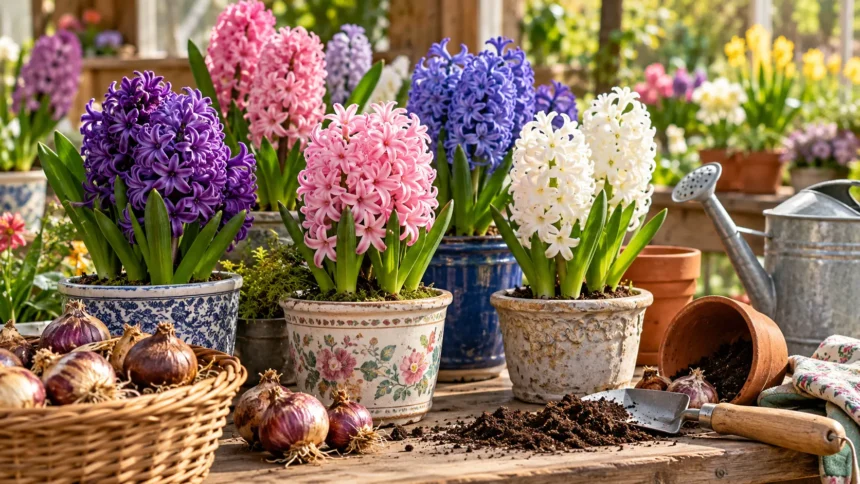
Hyacinths are among the most beautiful spring flowers, known for their colorful blooms and pleasant fragrance. Their tightly packed flower clusters can brighten garden beds, outdoor containers, balconies, and indoor spaces. Whether you are an experienced gardener or growing flowers for the first time, hyacinths offer a rewarding way to welcome the spring season.
Hyacinth care involves providing suitable sunlight, well-draining soil, appropriate watering, and a period of cool temperatures before flowering. These bulb-growing plants are available in several attractive colors, including blue, pink, purple, white, and yellow. With proper planting and seasonal care, hyacinths can produce fragrant flowers that create a beautiful display.
Growing hyacinths successfully begins with understanding their natural growth cycle and environmental requirements. From choosing healthy bulbs to managing flowering and dormancy, each stage influences the plant’s development. This guide explores hyacinth varieties, planting techniques, soil conditions, watering needs, propagation methods, and practical gardening tips for healthy spring blooms.
What Is a Hyacinth Flower?
Hyacinth is a spring-flowering bulbous plant belonging to the Asparagaceae family. The common garden hyacinth, scientifically known as Hyacinthus orientalis, produces dense clusters of small, fragrant flowers along an upright stem. It also develops narrow, strap-shaped green leaves that emerge from the base of the plant during its active growing season.
Hyacinths originate from parts of the eastern Mediterranean and southwestern Asia, where their natural growth cycle includes a cool season followed by spring flowering. Garden varieties have been developed in numerous colors and flower forms. Their compact growth habit makes them suitable for flower beds, borders, containers, and indoor arrangements.
Although hyacinths are commonly treated as seasonal flowers, they are perennial bulbs that can return in suitable growing conditions. However, their flower clusters may become smaller in subsequent years. Garden hyacinths should not be confused with grape hyacinths or water hyacinths, which belong to different botanical groups.
Popular Hyacinth Varieties for Home Gardens
Hyacinths are available in several cultivated varieties, each offering distinctive flower colors and decorative qualities. Blue Jacket is a popular variety with deep blue to purple-blue flowers and a noticeable fragrance. Delft Blue produces softer blue blossoms, making it suitable for gardeners who prefer gentle colors in their spring flower arrangements.
Pink Pearl is another attractive variety, producing clusters of bright pink flowers. Carnegie is known for its white blooms, which can complement colorful spring borders and containers. Woodstock features rich reddish-purple flowers that provide a deeper color contrast when planted alongside pale or pastel-colored hyacinths.
Other varieties include City of Haarlem, which develops soft yellow flowers, and Jan Bos, recognized for its strong pinkish-red blooms. These varieties generally share similar basic growing requirements despite their different appearances. When choosing bulbs, consider flower color, fragrance, expected height, local climate, and the overall design of your garden.
Best Time to Plant Hyacinth Bulbs
The ideal time to plant hyacinth bulbs depends on your local climate and seasonal temperatures. In regions with cold winters, gardeners typically plant bulbs during autumn, before the ground freezes. This allows the bulbs to develop roots and experience the cool conditions necessary for producing flowers during spring.
Hyacinths generally require a prolonged chilling period to flower successfully. In warmer climates with mild winters, natural outdoor temperatures may not provide sufficient cooling. Gardeners in these regions sometimes use properly pre-chilled bulbs or purchase varieties prepared specifically for growing in warm-winter locations.
Avoid planting bulbs while the soil remains excessively hot or waterlogged, as unfavorable conditions can affect root development. Healthy bulbs should feel firm and show no signs of decay or extensive damage. Planning ahead is particularly important because hyacinths are spring flowers that require preparation well before their expected blooming season.
How to Plant Hyacinth Bulbs Correctly
Start by selecting a location that receives adequate sunlight and has well-draining soil. Dig planting holes approximately four to six inches deep, depending on bulb size, soil conditions, and local recommendations. Place each bulb with the pointed end facing upward and the flatter root-producing end facing downward.
Space bulbs approximately four to six inches apart to provide room for healthy development. Cover them with soil and gently firm the surface without applying excessive pressure. Water the planting area after installation to help settle the soil around the bulbs and encourage root establishment.
When planting several bulbs together, consider arranging them in small groups for a fuller spring display. Hyacinths can also be combined with tulips, daffodils, and other spring-flowering plants. Always wear gardening gloves when handling bulbs because hyacinth bulbs can irritate the skin and contain substances that are harmful if swallowed.
Best Sunlight and Soil Conditions for Hyacinths
Hyacinths generally grow best in full sun to partial shade, with adequate light supporting healthy leaves and flower development. A location receiving several hours of direct sunlight is often suitable during the cooler growing season. In warmer regions, some protection from strong afternoon sunlight may help flowers remain attractive.
Well-draining soil is essential because hyacinth bulbs are vulnerable to rot when exposed to prolonged moisture. Loamy soil enriched with organic matter often provides favorable growing conditions. Heavy clay soil may benefit from improvements that increase drainage, while sandy soil may require organic material to improve moisture retention.
Avoid planting hyacinths in low areas where water regularly collects after rainfall. Raised garden beds or containers with drainage holes can provide alternatives when the existing soil remains excessively wet. Maintaining suitable soil conditions helps protect the bulbs while supporting steady root growth and seasonal flowering.
How Often Should You Water Hyacinth Plants?
Hyacinths require moisture during active growth, but excessive watering can damage their bulbs. After planting, water the soil sufficiently to encourage root development without creating soggy conditions. Established outdoor plants may receive adequate moisture from seasonal rainfall, depending on local weather patterns and soil drainage.
During active spring growth, check the soil before adding additional water. Water when the upper soil begins to dry, making sure moisture can reach the roots without remaining trapped around the bulb. Container-grown hyacinths may need closer monitoring because smaller pots can dry out or become waterlogged more quickly.
Once flowering ends and the foliage naturally begins to yellow, the plant gradually enters dormancy. Reduce watering as the leaves die back and the bulb completes its seasonal growth cycle. Dormant hyacinth bulbs generally prefer relatively dry conditions, particularly when summer temperatures are high and the soil remains warm.
How to Grow Hyacinths in Pots and Containers
Hyacinths are excellent choices for container gardening because their compact growth and colorful flowers suit balconies, patios, and small spaces. Choose a container with drainage holes and enough depth for healthy root development. A well-draining potting mix designed for outdoor containers can provide a suitable growing environment.
Place the bulbs with their pointed ends facing upward and cover them according to the planting method being used. Outdoor containers generally require sufficient soil depth to protect the bulbs and support healthy roots. Leave appropriate space between bulbs, and avoid packing the container so tightly that air circulation becomes poor.
Position outdoor pots where the bulbs can receive suitable cool temperatures and adequate light during growth. In areas with severe winter conditions, containers may require protection from repeated freezing and thawing. Move flowering pots into a sheltered location when necessary, but avoid keeping them in excessively warm indoor conditions.
How to Grow Hyacinths Indoors in Water
Growing hyacinths in water is a popular indoor gardening method known as bulb forcing. Special hyacinth glasses have a narrow upper section that supports the bulb above a reservoir of water. This arrangement allows roots to develop downward while keeping most of the bulb dry.
For reliable flowering, use bulbs that have already received the necessary chilling treatment or follow appropriate pre-chilling instructions. Place the bulb on the forcing vase and maintain the water level just below its base. The emerging roots can extend into the water, but the bulb itself should not remain submerged.
Keep the arrangement in a cool environment during root development, following the requirements of the selected bulbs. Once suitable roots and shoots have developed, gradually introduce the plant to brighter indoor conditions. Replace or replenish water as necessary, and avoid placing flowering hyacinths near heaters or strong direct sunlight.
Temperature and Chilling Requirements for Hyacinth Bulbs
Hyacinths need an extended period of cool temperatures to complete the process that allows successful flowering. For indoor forcing, many varieties require approximately 12 to 15 weeks of chilling around 35 to 45 degrees Fahrenheit. Requirements can vary depending on the cultivar, bulb preparation, and growing method.
Gardeners sometimes provide this chilling period using a suitable refrigerator or another consistently cool location. Bulbs should be kept separate from ripening fruit, which releases ethylene gas that can interfere with flowering. Clearly label stored bulbs and keep them away from food preparation areas, pets, and young children.
After the required chilling period, bulbs can be moved into appropriate growing conditions to encourage shoots and flower development. Indoor hyacinths generally perform well in cool, bright environments during this stage. Excessively warm temperatures may shorten flowering time, while inadequate chilling can produce disappointing or irregular blooms.
How to Care for Hyacinths After Flowering
Hyacinth flowers gradually fade after their blooming period, but the plant continues an important part of its growth cycle. Once the flowers have finished, remove the spent flower stalk if desired while leaving the green foliage intact. The leaves continue photosynthesis and help replenish the bulb’s stored energy.
Avoid cutting back healthy green leaves immediately after flowering because doing so can weaken future growth. Allow the foliage to turn yellow and dry naturally before removing it. During this period, provide appropriate moisture while avoiding excessive watering that could encourage bulb decay.
Outdoor bulbs can often remain in the ground when the climate and drainage conditions are suitable. Container-grown bulbs may need additional attention during dormancy, particularly in regions with wet summers. Hyacinths forced indoors may flower less reliably in later seasons, but soil-grown bulbs can sometimes be replanted outdoors for future growth.
Common Hyacinth Growing Problems and Solutions
One common hyacinth problem is bulb rot, which often develops when the soil remains excessively wet. Affected bulbs may become soft, discolored, or unpleasant-smelling, and healthy shoots may fail to appear. Improving drainage and avoiding unnecessary watering are important ways to reduce the risk of moisture-related problems.
Hyacinths may also produce weak stems or limited flowers when they receive insufficient chilling or unfavorable growing conditions. Poor light, overly warm temperatures, and damaged bulbs can affect plant development. Choosing healthy planting material and following suitable seasonal care practices can improve the chances of successful flowering.
Fungal diseases and pests may occasionally affect hyacinth foliage or bulbs. Watch for unusual spots, distorted growth, or signs of decay, and remove severely affected plant material when appropriate. Good spacing, clean gardening tools, and well-draining soil can help maintain healthier conditions while reducing some common plant problems.
Hyacinth Safety and Garden Design Tips
Hyacinths can create attractive spring displays when planted along pathways, flower borders, or in decorative containers. Their colorful clusters combine beautifully with early-season plants such as tulips, primroses, and daffodils. Grouping several bulbs of the same color can create a coordinated appearance, while mixed varieties offer a more colorful arrangement.
Their strong fragrance also makes hyacinths popular near entrances and outdoor seating areas. However, some people may find the scent overwhelming in enclosed spaces, so indoor placement should consider personal sensitivity. Hyacinth flowers can also attract early-season pollinators when grown outdoors under suitable conditions.
All parts of true hyacinth plants contain potentially harmful compounds, with bulbs presenting particular concern if swallowed. Keep them away from pets and young children, and use gloves when handling bulbs to avoid skin irritation. Hyacinths are grown primarily for decoration and should never be mistaken for edible garden plants.
Conclusion
Hyacinths are beautiful spring-flowering plants that bring color, fragrance, and seasonal charm to gardens and indoor spaces. Their dense flower clusters and wide variety of colors make them suitable for different decorative arrangements. With appropriate planting conditions, healthy bulbs can produce attractive blooms during the spring growing season.
Successful hyacinth care depends on providing well-draining soil, suitable sunlight, careful watering, and the required period of cool temperatures. Planting bulbs at the appropriate time and allowing foliage to die back naturally are also important. Understanding the plant’s seasonal growth cycle makes long-term care more manageable.
Whether you choose blue, pink, white, purple, or yellow varieties, hyacinths can become a rewarding addition to your garden. Start with healthy bulbs, select a suitable growing location, and adjust care according to your climate. With thoughtful preparation and regular attention, you can enjoy their beautiful spring flowers and delightful fragrance.
Frequently Asked Questions
Do Hyacinths Come Back Every Year?
Yes, hyacinths are perennial bulbs that can return in suitable growing conditions. However, their flower clusters may become smaller over time, especially when the plants experience insufficient winter chilling.
Can Hyacinths Grow Indoors?
Yes, hyacinths can grow indoors in containers or special water-forcing vases. They generally require a suitable chilling period before flowering and perform best in cool, bright indoor conditions.
How Long Do Hyacinth Flowers Last?
Hyacinth flowers often remain attractive for approximately one to two weeks, depending on temperature and growing conditions. Cooler environments may help extend the blooming period compared with excessively warm locations.
Do Hyacinths Need Full Sun or Shade?
Hyacinths generally prefer full sun to partial shade. Several hours of sunlight during their active growing season can support healthy development, while some afternoon protection may be useful in warmer climates.
Are Hyacinths Toxic to Cats and Dogs?
Yes, true hyacinths are toxic to cats and dogs, particularly their bulbs. Swallowing plant material can cause harmful reactions, so keep hyacinths inaccessible to pets and seek veterinary advice if ingestion occurs.