

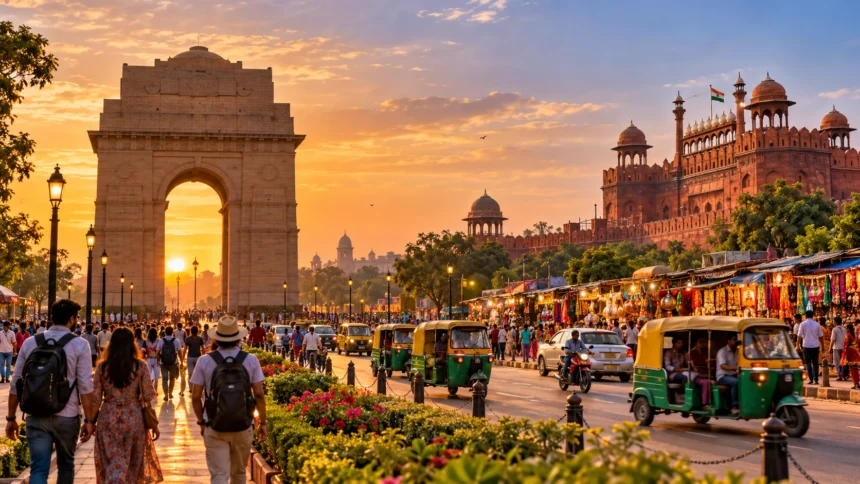
Why Delhi Is Worth Visiting
Delhi is one of India’s most fascinating cities, bringing together centuries of history, monumental architecture, colorful markets, modern neighborhoods, religious landmarks, and unforgettable food. Ancient ruins stand close to busy shopping streets and contemporary districts, creating constant contrasts. Travelers interested in history, culture, photography, food, and architecture can easily fill several days without running out of worthwhile experiences.
The city is broadly divided between historic areas such as Old Delhi and newer districts that developed around wide avenues, commercial centers, parks, and government buildings. Exploring both sides gives you a fuller understanding of Delhi. One day might involve Mughal monuments and crowded bazaars, while the next could include peaceful gardens, museums, modern cafés, and elegant boulevards.
Delhi also serves as an important starting point for wider journeys through northern India, but it deserves more than a quick stop. Spending three to five days gives you time to experience major landmarks without rushing. With thoughtful planning, comfortable footwear, and a willingness to explore beyond headline attractions, Delhi can become one of the most memorable parts of an India trip.
Explore the Red Fort and Old Delhi
The Red Fort is one of Delhi’s most recognizable historic landmarks and an essential stop for first-time visitors. Its massive red sandstone walls reflect the grandeur of the Mughal period and provide an impressive introduction to Old Delhi. Inside the complex, visitors can walk through courtyards, gateways, halls, and architectural remains while learning more about the city’s imperial past.
Give yourself enough time to explore rather than treating the fort as a quick photograph stop. The scale of the complex becomes more apparent once you pass through the entrance and move between its different structures. Visiting earlier in the day can also make walking more comfortable, especially during warmer months when Delhi’s afternoon temperatures can become demanding.
The Red Fort fits naturally into a wider Old Delhi itinerary because several important attractions lie nearby. After exploring the monument, continue toward busy markets, historic religious sites, and traditional food areas. The contrast between the spacious fort and the energetic streets outside provides an excellent introduction to Delhi’s ability to place history and modern life side by side.
Visit Jama Masjid and Chandni Chowk
Jama Masjid is one of the most impressive religious landmarks in Old Delhi. Its large courtyard, striking architecture, and position above surrounding streets create a powerful sense of scale. Visitors should dress respectfully, follow local instructions, and remember that the mosque remains an active place of worship rather than simply a historic attraction.
From the mosque, you can continue into Chandni Chowk, one of Delhi’s most famous market districts. Narrow streets and busy lanes are filled with textile shops, jewelry stores, spice sellers, food stalls, and traditional businesses. The area can initially feel overwhelming, but slowing down and focusing on one section at a time makes the experience far more enjoyable.
Walking and cycle rickshaws are popular ways to experience the neighborhood, depending on traffic and comfort. Keep personal belongings secure because streets can become extremely crowded. Instead of trying to shop everywhere, choose a few lanes, stop for food, and observe the daily activity that has made Old Delhi one of the city’s most distinctive cultural experiences.
See India Gate and Central Delhi
India Gate is one of New Delhi’s most recognizable monuments and stands within a broad ceremonial landscape of lawns and major government avenues. The surrounding area feels noticeably different from the crowded lanes of Old Delhi. Wide roads, open spaces, and monumental architecture create a more spacious setting that is especially pleasant during cooler parts of the day.
A walk through the broader central district provides views toward important national buildings and landscaped public areas. Evening can be an enjoyable time to visit because temperatures are often more comfortable and the monument takes on a different appearance after sunset. Families, visitors, and local residents commonly gather in surrounding spaces to relax and enjoy the atmosphere.
Central Delhi works well as part of a slower sightseeing day because distances between major points can be greater than they appear. Using the Metro, taxis, or ride-hailing services can reduce unnecessary walking. Combine India Gate with nearby museums, parks, or another central attraction rather than attempting to cross the entire city multiple times in one afternoon.
Discover Humayun’s Tomb and Sunder Nursery
Humayun’s Tomb is one of Delhi’s finest examples of Mughal architecture and is surrounded by a carefully arranged garden setting. The large mausoleum, symmetrical pathways, arched details, and red sandstone create an impressive visual experience. Travelers interested in architecture will notice design elements that later became influential in other major Mughal monuments across India.
Walking through the complex at a relaxed pace allows you to appreciate smaller structures as well as the main tomb. Early morning or late afternoon light can be particularly attractive for photography. The gardens also provide a quieter atmosphere than many central Delhi streets, making the visit a welcome break from traffic and crowded commercial districts.
Nearby Sunder Nursery offers another peaceful environment filled with landscaped gardens, historic structures, walking paths, and green spaces. Combining both locations can create an excellent half-day itinerary focused on heritage and nature. Bring water and allow time to sit in the gardens rather than moving immediately to another distant attraction after finishing your sightseeing.
Explore Qutub Minar and Mehrauli
Qutub Minar is one of Delhi’s most impressive historic monuments and dominates a large archaeological complex in the southern part of the city. The tall stone tower is surrounded by ruins, gateways, columns, and structures representing several periods of Delhi’s history. Its detailed carvings and dramatic scale make it particularly rewarding for visitors interested in architecture and photography.
Do not focus only on the tower itself. Walking through the surrounding complex reveals courtyards, historic remains, and architectural details that help place Qutub Minar within a wider historical setting. Because much of the attraction is outdoors, mornings can provide more comfortable temperatures and softer light during hot seasons.
Travelers with additional time can explore more of the Mehrauli area, where archaeological remains and historic sites appear throughout the surrounding landscape. This part of Delhi demonstrates how different eras overlap across the city. Pairing Qutub Minar with nearby heritage areas gives history-focused visitors a much deeper experience than visiting the famous tower alone.
Experience the Lotus Temple and South Delhi
The Lotus Temple is one of Delhi’s most distinctive modern landmarks, known for its flower-inspired architecture and peaceful surroundings. Its white exterior stands out dramatically against landscaped gardens and open space. Visitors of different backgrounds are welcome to experience the calm interior, where silence and reflection form an important part of the atmosphere.
The visit is usually straightforward, but crowds can increase during popular travel periods and weekends. Dress comfortably and be prepared to remove footwear where required. The peaceful environment provides a strong contrast with Delhi’s traffic and markets, making the temple a useful stop between busier sightseeing experiences.
South Delhi contains many other neighborhoods, cafés, parks, shopping areas, and cultural attractions that can be combined with a Lotus Temple visit. Rather than crossing back and forth across the city, group southern attractions into the same day. This reduces travel time and gives you more opportunities to explore local neighborhoods rather than spending hours in traffic.
Visit Gurudwara Bangla Sahib and Connaught Place
Gurudwara Bangla Sahib is one of Delhi’s most important Sikh places of worship and offers visitors a peaceful, welcoming experience. The white building, golden dome, and large pool create a striking setting in central Delhi. Visitors should cover their heads, remove shoes, and follow local customs respectfully while exploring the complex.
One of the most meaningful aspects of visiting a gurdwara is observing the emphasis on service and community. The atmosphere can feel calm even though the site receives many visitors. Approach the experience respectfully, avoid treating worshippers as tourist subjects, and take time to understand the cultural values represented by the space.
From Bangla Sahib, continue toward Connaught Place, a major commercial and social center filled with shops, restaurants, cafés, and colonial-era architecture. The circular layout can initially feel confusing, but it is easy to explore on foot. This pairing creates a balanced itinerary combining spiritual heritage with modern shopping, dining, and city life.
Shop at Dilli Haat and Local Markets
Shopping in Delhi can range from modern malls to traditional bazaars filled with textiles, handicrafts, jewelry, spices, home décor, and clothing. Dilli Haat is a convenient place for visitors who want to explore crafts and regional products in a more organized environment. Food stalls also provide opportunities to sample dishes associated with different parts of India.
Traditional markets offer a very different atmosphere. Depending on what you want to buy, different neighborhoods specialize in fabrics, jewelry, books, household items, electronics, or food. Bargaining may be common in some markets, while fixed prices apply elsewhere, so observe how a particular shop operates before negotiating.
Avoid trying to visit too many markets in one day because crowded streets and travel time can become tiring. Choose one or two based on your interests and allow time to browse slowly. Carry only what you need, keep valuables secure, and bring an extra bag if you expect to purchase textiles, crafts, or souvenirs.
Taste Delhi’s Famous Food
Food is one of the biggest reasons to spend extra time in Delhi. The city offers everything from busy street stalls to family-run restaurants, elegant dining rooms, and modern cafés. Popular flavors include rich curries, grilled meats, kebabs, breads, chaat, stuffed parathas, sweets, and countless regional dishes brought to the capital from across India.
Old Delhi is particularly famous for traditional food experiences, while other neighborhoods provide excellent modern and regional dining choices. Instead of attempting several heavy meals in one day, spread your food exploration across the trip. Breakfast, afternoon snacks, tea, dinner, and desserts can each become opportunities to try something different.
Travelers unfamiliar with local street food should choose busy, reputable vendors where ingredients are prepared fresh and turnover is high. Bottled or properly treated water is also sensible for visitors. Food tours can be useful for first-time travelers who want guidance with ordering and understanding dishes, but independent exploration can be equally rewarding with careful choices.
Relax in Lodhi Garden and Delhi’s Green Spaces
Delhi’s busy streets can be intense, so spending time in a park provides a welcome change of pace. Lodhi Garden is one of the city’s most enjoyable green spaces, combining walking paths, mature trees, lawns, and historic tombs. The mix of landscape and architecture makes it suitable for both relaxed walks and casual sightseeing.
Early mornings are especially pleasant, when joggers, walkers, photographers, and local residents use the park before the day becomes warmer. Unlike formal monuments with a fixed sightseeing route, the garden encourages visitors to wander freely. Bring water, find a shaded area, and enjoy having time without a long list of attractions to complete.
Other parks and landscaped heritage areas throughout Delhi can provide similar breaks between museums, markets, and monuments. Including one green space every day or two can make a busy itinerary feel more manageable. This is particularly helpful for families or travelers who prefer slower sightseeing rather than spending entire days moving through crowded historic sites.
Explore Delhi’s Museums and Cultural Attractions
Delhi’s museums can provide valuable background for the historic monuments you see across the city. Collections covering archaeology, art, crafts, transportation, science, modern history, and national heritage offer many choices. Selecting one or two based on your interests is usually more rewarding than attempting to visit every major museum during a short stay.
Museums are also useful during extremely hot afternoons, rainy periods, or moments when you need a break from outdoor sightseeing. Spending several hours indoors can help you preserve energy while still experiencing the city. Afterward, the information you learned may make nearby monuments and cultural sites easier to understand.
Families can also find several educational attractions that offer a change from forts and religious buildings. When planning museum visits, consider their location and combine them with nearby neighborhoods or landmarks. Delhi is large, so grouping attractions geographically is one of the easiest ways to create a comfortable and efficient travel itinerary.
Plan the Best Time and Way to Explore Delhi
Delhi’s weather changes significantly through the year, so choosing the right season can affect your experience. Cooler months are generally more comfortable for long days of walking, while summer temperatures can make afternoon sightseeing difficult. Seasonal air quality, rain, and visibility can also influence outdoor plans, so flexible scheduling is useful.
The Delhi Metro is one of the most practical ways to cover longer distances across the city. Taxis, auto-rickshaws, and ride-hailing services are also useful, particularly when attractions are not close to convenient stations. Traffic can be heavy, so avoid scheduling major attractions at opposite ends of Delhi without allowing generous travel time.
A three-to-five-day itinerary works well for many first-time visitors. Use one day for Old Delhi, another for central landmarks, and another for southern heritage sites. Additional days can include museums, gardens, markets, food experiences, and slower neighborhood exploration without turning the trip into a race between distant attractions.
Conclusion
Delhi offers an extraordinary mix of Mughal monuments, religious landmarks, traditional markets, modern neighborhoods, museums, gardens, and memorable food. The Red Fort, Qutub Minar, Humayun’s Tomb, India Gate, Jama Masjid, Lotus Temple, and historic neighborhoods provide a strong introduction to the city’s many layers.
The best Delhi experience also includes time away from major landmarks. Explore markets, eat local dishes, relax in a garden, walk through Connaught Place, and observe everyday life across different neighborhoods. These smaller experiences help reveal a city that cannot be understood only through famous monuments and photographs.
Plan at least three days if possible, group nearby attractions together, and avoid overloading each day. Delhi’s size, traffic, weather, and energy reward travelers who move at a realistic pace. With comfortable shoes, flexible plans, and curiosity, the city can deliver one of the richest cultural experiences in northern India.
FAQs
How many days do you need in Delhi?
Three to five days works well for first-time visitors. This gives you enough time for Old Delhi, major monuments, central attractions, markets, museums, gardens, and food experiences without making every day feel rushed.
What are the best things to do in Delhi?
Top experiences include visiting the Red Fort, Qutub Minar, Humayun’s Tomb, India Gate, Jama Masjid, Lotus Temple, and Gurudwara Bangla Sahib, plus exploring Old Delhi markets and local food.
What is the best area to explore for first-time visitors?
Old Delhi is essential for history, markets, and traditional food, while central New Delhi offers major landmarks and easier urban sightseeing. Visiting both areas provides a better understanding of the city.
Is the Delhi Metro useful for tourists?
Yes. The Metro is a practical way to travel between many parts of Delhi while avoiding some road traffic. Taxis and auto-rickshaws remain useful for attractions located farther from stations.
What food should I try in Delhi?
Try chaat, kebabs, parathas, curries, breads, grilled dishes, and traditional sweets. Delhi also offers regional cuisines from across India, so exploring several neighborhoods can provide a much wider variety of flavors.