
The money plant is one of the most popular indoor plants for people who want to bring natural greenery into their homes. Its attractive leaves, trailing vines, and relatively simple care requirements make it a favorite among beginners and experienced gardeners. Whether placed on a shelf, near a window, or in a hanging basket, this plant can add a refreshing natural touch to different spaces.
Money plant care involves providing suitable indirect sunlight, watering when the soil begins to dry, and choosing a pot with good drainage. The plant can grow in soil or be propagated in water, making it a flexible option for indoor gardening. With proper attention, its vines can grow longer and produce attractive foliage throughout the year.
Many people also associate money plants with good luck, prosperity, and positive energy. Although these beliefs are cultural traditions rather than scientifically proven effects, the plant remains a popular decorative choice. This guide explains money plant varieties, growing methods, watering requirements, propagation techniques, and common care mistakes.
What Is a Money Plant?
Money plant is a common name used for several different houseplants. In many South Asian countries, it usually refers to pothos, scientifically known as Epipremnum aureum. This tropical evergreen vine belongs to the Araceae family and is recognized for its glossy, heart-shaped leaves and long climbing or trailing stems.
Pothos is also commonly called devil’s ivy or golden pothos. It can grow along a support, trail from a hanging container, or spread across a shelf when given suitable conditions. Its adaptability to different indoor environments makes it a practical houseplant for people who are just beginning their gardening journey.
The name money plant can also describe other species, including the money tree, Chinese money plant, and jade plant. These plants have different appearances and care requirements despite sharing a similar common name. This article mainly focuses on pothos, the climbing money plant commonly grown in soil and water.
Popular Money Plant Varieties for Indoor Growing
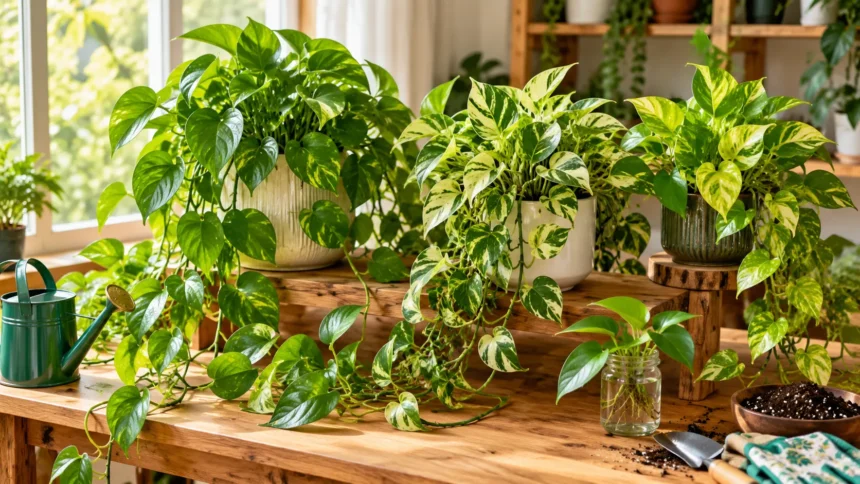
Golden pothos is among the most recognizable money plant varieties because of its green leaves with yellow or golden markings. It grows as a trailing or climbing vine and can adapt to various indoor lighting conditions. Its colorful foliage makes it a popular choice for hanging baskets, shelves, and decorative containers.
Marble Queen pothos is another attractive variety featuring cream and green marbled leaves. Neon pothos produces bright yellow-green foliage that adds a lively appearance to indoor spaces. Both varieties generally prefer bright, indirect light, although highly variegated plants may lose some of their distinctive appearance in darker locations.
Other varieties include Jade pothos, known for its mostly solid green leaves, and Manjula pothos, which has broad, variegated foliage. Each cultivar offers a different appearance while sharing similar basic growing requirements. Choosing a variety depends on your preferred leaf colors, available lighting, and desired decorative style.
Best Light Conditions for Healthy Money Plant Growth
Money plants generally grow best in bright, indirect sunlight. A location near a window with filtered natural light can encourage healthy foliage and steady vine development. Although pothos can tolerate lower light levels, growth may become slower, and highly variegated varieties may develop greener leaves.
Direct afternoon sunlight can damage delicate foliage, particularly when the plant is placed close to an exposed window. Too much strong sunlight may cause brown patches, fading, or dry leaf edges. Moving the container slightly away from the window or using a sheer curtain can help provide gentler lighting.
If your home receives limited natural light, place the plant in the brightest suitable location available. Indoor grow lights can provide additional illumination when necessary, provided they are designed for houseplants and used appropriately. Observe the foliage regularly because changes in growth and leaf color can indicate whether the lighting conditions need adjustment.
How Often Should You Water a Money Plant?
Watering is one of the most important parts of money plant care because both excessive moisture and prolonged dryness can affect growth. Pothos generally prefers its potting mix to dry partially between waterings. Before adding water, check the upper inch or two of soil with your finger to determine whether moisture is still present.
When the soil feels sufficiently dry, water the plant thoroughly until excess moisture drains from the bottom of the container. Allow the pot to drain completely before returning it to a decorative holder. Avoid leaving the roots sitting in collected water because prolonged saturation can contribute to root rot.
There is no single watering schedule that works for every money plant. Temperature, humidity, pot size, soil type, and available sunlight all influence how quickly the potting mix dries. Plants may need more frequent watering during warmer growing conditions and less during cooler periods when growth slows.
Best Soil and Potting Mix for Money Plants
Money plants grow well in a loose, well-draining potting mix that retains some moisture without becoming waterlogged. A general indoor potting mix is often suitable, especially when it contains materials that improve drainage and airflow. Healthy root conditions are important because excessively compact soil can remain wet for too long.
Perlite, orchid bark, or similar horticultural materials can be added to improve the structure of a dense potting mix. These ingredients create spaces that allow excess water to move through the container more easily. The goal is to provide a balance between moisture retention and aeration rather than creating an extremely dry growing environment.
When preparing soil for a money plant, avoid using heavy garden soil that becomes compacted inside containers. Outdoor soil may also introduce pests or other unwanted organisms into indoor spaces. Choosing a suitable commercial houseplant mix provides a convenient starting point, while adjustments can be made based on how the plant responds.
How to Grow a Money Plant in a Pot
Growing a money plant in a pot is straightforward when you choose a suitable container and growing medium. Select a pot with drainage holes and enough room for the existing roots. An oversized container may hold unnecessary moisture, so choose a size appropriate for the current plant rather than its eventual growth.
Place a small amount of potting mix at the bottom of the container before positioning the plant. Gently arrange the roots and fill the surrounding space with more soil, keeping the plant at approximately its original planting depth. Press the soil lightly to provide support without making it excessively compact.
After planting, water the soil and allow the excess moisture to drain away. Position the container somewhere with suitable indirect light and monitor the plant as it adjusts. Repotting may be necessary later when roots become crowded, drainage becomes difficult, or the existing potting mix begins to deteriorate.
How to Grow and Propagate a Money Plant in Water
Money plants are commonly propagated in water because their stem cuttings can produce roots from nodes. Choose a healthy vine and identify a node, which is the point where a leaf connects to the stem. Using clean pruning scissors, take a cutting that includes at least one healthy node and leaf.
Place the cutting in a clean glass or container filled with enough water to cover the node while keeping most leaves above the surface. Position it in bright, indirect light rather than strong direct sunlight. Replace the water regularly to keep it fresh and observe the development of roots over the following weeks.
Once the cutting has developed a suitable root system, you can transfer it into a small pot containing well-draining soil. Water-grown plants can also be maintained in water with appropriate care and nutrients. Remember that pothos is harmful if chewed or swallowed by pets, so keep both plants and cuttings safely out of their reach.
How to Make a Money Plant Grow Faster and Fuller
Healthy growth begins with providing suitable light, moisture, and growing conditions. Bright, indirect sunlight generally encourages stronger development than a very dark location. Consistent care is more useful than repeatedly changing the plant’s position or adding excessive water and fertilizer in an attempt to accelerate growth.
Pruning can encourage branching and create a fuller appearance when stems become long and sparse. Use clean scissors to trim a vine just above a node, leaving healthy foliage on the remaining stem. The removed section may be used for propagation, allowing you to grow additional plants or fill gaps in an existing container.
You can also encourage a climbing growth habit by providing a moss pole, trellis, or another suitable support. Pothos vines naturally produce aerial roots that can attach to surfaces under appropriate conditions. Supporting the vines may encourage larger leaves over time, particularly when the plant receives sufficient light and other favorable growing conditions.
Temperature, Humidity, and Fertilizer Requirements
Money plants generally prefer warm indoor temperatures and should be protected from freezing conditions. They grow comfortably in many ordinary household environments, particularly when temperatures remain relatively stable. Keep the plant away from cold drafts, extremely hot surfaces, and direct airflow from heating or cooling equipment.
Average indoor humidity is often sufficient for pothos, although the plant may appreciate somewhat higher humidity in particularly dry environments. Excessively dry air can sometimes contribute to brown leaf edges, especially when combined with other care problems. Good airflow remains important because constantly damp conditions may encourage certain plant diseases.
Fertilizer can support growth during active growing periods, but money plants do not require heavy feeding. A balanced houseplant fertilizer diluted according to its instructions is generally suitable when nutrients are needed. Avoid applying excessive fertilizer, as accumulated salts can damage roots and contribute to leaf discoloration or poor growth.
Common Money Plant Problems and How to Fix Them
Yellow leaves are among the most common problems money plant owners experience. They may develop because of excessive watering, aging foliage, inadequate light, or other environmental conditions. Check the soil moisture and inspect the roots when necessary before making changes, because yellowing alone does not identify one specific problem.
Brown leaf tips or edges can develop when the plant experiences inconsistent watering, dry conditions, fertilizer buildup, or excessive sunlight. Weak, stretched vines may suggest that the plant needs more light. Adjust growing conditions gradually and remove severely damaged leaves when appropriate rather than making several major changes simultaneously.
Money plants can also attract pests such as mealybugs, spider mites, and scale insects. Inspect the undersides of leaves and areas where stems meet the foliage for signs of infestation. Isolate affected plants, gently remove visible pests when practical, and use a suitable houseplant treatment according to its label if additional control is necessary.
Money Plant Benefits, Placement, and Safety Tips
Money plants are popular indoor decorations because their trailing vines can soften shelves, brighten corners, and complement different interior styles. They can be displayed in hanging planters, wall-mounted containers, or pots placed on suitable furniture. Their versatility makes them useful for apartments, offices, and other spaces with limited room for larger plants.
Some people believe money plants attract wealth, prosperity, or positive energy when placed in particular areas of the home. These ideas are associated with cultural traditions such as Feng Shui and Vastu Shastra. Although such beliefs can hold personal meaning, there is no scientific evidence that money plants directly increase financial success.
It is also important to understand that pothos contains insoluble calcium oxalate crystals that can irritate the mouth and digestive system when chewed or swallowed. The plant is toxic to cats and dogs and should be kept away from pets and young children. It is also best not to rely on houseplants as a substitute for proper indoor ventilation or air quality control.
Conclusion
Money plants are attractive, adaptable houseplants that can bring natural greenery into indoor spaces. Their trailing vines, colorful varieties, and simple growing requirements make them popular among both beginner and experienced gardeners. With suitable light, watering, and potting conditions, pothos can develop into a healthy and decorative indoor plant.
Successful money plant care begins with understanding the plant’s basic needs rather than following a rigid schedule. Bright, indirect sunlight, well-draining soil, careful watering, and occasional pruning can support healthy growth. Propagating cuttings in water also provides an accessible way to grow new plants from an established vine.
Whether you prefer Golden pothos, Marble Queen, Neon pothos, or another variety, choose a plant that suits your growing environment and decorative preferences. Monitor its condition, adjust care when necessary, and keep it safely away from pets and young children. With regular attention, a money plant can remain an enjoyable part of your indoor garden for years.
Frequently Asked Questions
How Often Should I Water My Money Plant?
Water your money plant when the upper inch or two of soil feels dry. The frequency depends on temperature, sunlight, humidity, and pot size, so check the soil rather than following a fixed schedule.
Can a Money Plant Grow Without Sunlight?
Money plants can tolerate low natural light, but they still require sufficient light for photosynthesis. Bright, indirect sunlight or suitable artificial grow lighting supports healthier growth than complete darkness.
Can Money Plants Grow Permanently in Water?
Yes, pothos can grow in water for extended periods when properly maintained. Replace the water regularly, keep the roots healthy, and provide appropriate nutrients because plain water does not contain everything the plant needs.
Why Are My Money Plant Leaves Turning Yellow?
Yellow leaves can result from overwatering, insufficient light, natural leaf aging, or other growing problems. Inspect the soil, drainage, and plant environment to identify the likely cause before adjusting your care routine.
Which Money Plant Variety Is Best for Beginners?
Golden pothos and Jade pothos are often good starting choices because they tolerate a range of indoor conditions. Both offer attractive foliage and can grow successfully with appropriate light, watering, and drainage.