

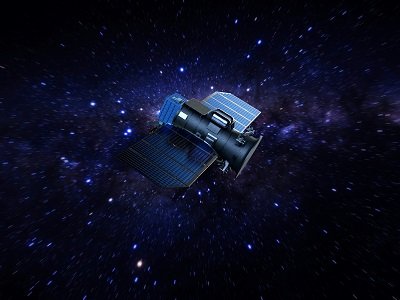
Space exploration, the investigation of outer space through the use of space technology, has evolved significantly since its inception. The journey began in the mid-20th century with the launch of satellite Sputnik 1 by the Soviet Union in 1957. This pivotal moment marked the dawn of the space age and expanded humanity’s horizons. Following Sputnik, the United States launched Explorer 1, which discovered the Van Allen radiation belts and reinforced the importance of research in the field of physics and technology.
Over the decades, several key milestones have shaped the landscape of space exploration. Notable achievements include the Apollo missions that culminated in the historic moon landings between 1969 and 1972, demonstrating the potential for human travel beyond Earth. The establishment of the International Space Station (ISS) in 1998 further exemplifies international collaboration, serving as a laboratory for scientific research and fostering relationships among nations committed to exploration.
As we look toward the future, advancing technologies play a critical role in furthering space exploration initiatives. Innovations in propulsion systems, robotics, and communication technologies are essential in optimizing the efficacy of missions to distant planets and beyond. Moreover, advancements in life support systems are pivotal for sustaining human presence on other celestial bodies, such as Mars. The increasing participation of private companies in space ventures alongside governmental organizations has revolutionized the industry, enhancing mission capabilities and cost-efficiency.
The global interest in exploring beyond our planet transcends national borders. Countries around the globe, through collaborations and treaties, aim to establish peaceful exploration efforts that not only seek to expand our knowledge of the universe but also to address challenges such as climate change and resource scarcity on Earth. Ultimately, the journey into space fosters innovation and strengthens international partnerships.
Current Trends in Space Technology
In recent years, space technology has experienced a remarkable evolution characterized by significant advancements that promise to reshape the future of exploration. One of the most notable trends is the development of reusable rockets. Companies like SpaceX have pioneered the use of these systems, enabling rockets to be launched, returned, and prepared for multiple flights. This remarkable innovation has drastically reduced the cost of access to space, democratizing space exploration and opening up new possibilities for commercial ventures.
Another critical area of advancement lies in satellite technology. The miniaturization of components has made it possible to deploy small satellites, or CubeSats, that are less expensive and quicker to manufacture. These satellites have revolutionized Earth observation and communication, providing valuable data for various industries while enhancing our understanding of environmental changes. Noteworthy examples include companies like Planet Labs, which utilize fleets of small satellites to monitor Earth’s surface on a global scale.
Furthermore, spacecraft design has also seen substantial innovations. The focus on designing spacecraft that are not only efficient but also adaptable for diverse missions is crucial for future exploration endeavors. NASA’s Artemis program, aimed at returning humans to the Moon, is a prime example of advanced spacecraft development, utilizing the Space Launch System (SLS) and the Orion crew capsule to support deep-space missions. Companies such as Blue Origin are also contributing to this trend, working on various spacecraft designs aimed at making space travel more accessible.
Ultimately, these advancements in space technology—including reusable rockets, satellite technology, and innovative spacecraft design—are setting the stage for a future brimming with possibilities for exploration and utilization of outer space.
Mars Missions: Preparing for Human Habitation
The ongoing exploration of Mars has heightened interest in preparing for human habitation on the red planet. Various missions, both robotic and planned human expeditions, play a crucial role in addressing the technological challenges of sustaining life. Several space agencies, including NASA and ESA, are collaborating on ambitious projects aimed at establishing a human presence on Mars, with a focus on developing habitats, life support systems, and sustainable practices vital for long-term survival.
Technological challenges include ensuring adequate radiation protection, reliable life support systems, and sustainable food and water sources. Research is being conducted on how to utilize Martian resources effectively, particularly through the development of in-situ resource utilization (ISRU) technologies. ISRU could allow astronauts to produce oxygen, water, and even food directly from Martian materials, reducing the amount of supplies that need to be launched from Earth.
Robotic missions, such as the Perseverance rover and the Ingenuity helicopter, are paving the way for future human exploration by gathering critical data about the Martian environment. These missions provide insights into the planet’s surface conditions, climate, and potential hazards that any human crew might face. They also assist in locating potential landing sites and identifying resources essential for human survival.
The path to human habitation on Mars is also marked by international collaboration. Different nations are joining forces to share knowledge, technology, and resources, enhancing the efficiency and effectiveness of Mars missions. This collaborative approach not only aims to advance space technology but also fosters a spirit of unity in pursuing the common goal of interplanetary exploration.
The Role of Artificial Intelligence in Space Exploration
Artificial Intelligence (AI) is becoming an integral component in the realm of space exploration, fundamentally altering how missions are conducted and enhancing the overall safety and efficiency of space technology. By automating various tasks, AI allows for seamless operations in environments where human involvement is limited or impossible. This is particularly evident in autonomous systems, where spacecraft and rovers equipped with AI can navigate and make decisions without real-time human input.
One of the critical applications of AI in space exploration is in data analysis. The vast amounts of data collected during missions can often be overwhelming, making it challenging for scientists to process and analyze effectively. AI algorithms can sift through extensive datasets, identify patterns, and even make real-time predictions, thereby accelerating the research process. This capability is particularly beneficial in astrobiology, where AI can help analyze data gathered from celestial bodies to detect signs of life.
Moreover, AI enhances decision-making processes for spacecraft. In the midst of mission operations, various unexpected scenarios may arise. AI systems can be programmed to evaluate multiple variables rapidly and make informed decisions based on real-time data, significantly reducing response time during critical situations. For instance, if a spacecraft encounters an obstacle, AI can assess the situation and autonomously reroute the craft in a way that a human operator may not be able to achieve in time.
In conclusion, the integration of Artificial Intelligence into space exploration marks a transformative shift in how missions are planned and executed. From enabling autonomous operations to revolutionizing data processing and decision-making, AI emerges as a pivotal force in the future of space technology, promising to enhance the safety and efficiency of exploratory endeavors beyond our planet.
The Search for Extraterrestrial Life
The quest for extraterrestrial life is one of the most intriguing aspects of modern space exploration, captivating imaginations and driving scientific inquiry across the globe. Efforts to discover life beyond Earth have shifted dramatically with the advancement of technology and our understanding of the universe. Current missions and research predominantly focus on the exploration of exoplanets, biosignature detection technologies, and the burgeoning field of astrobiology.
Exoplanets, which are planets located outside our solar system, have become prime targets in the search for life. Thousands of exoplanets have been discovered, many situated in the “habitable zone” where conditions may be right for life to develop. Space telescopes such as the Kepler Space Telescope and the recently launched James Webb Space Telescope play critical roles in identifying these celestial bodies and providing essential data regarding their atmospheres and environments.
Detecting biosignatures—elements or compounds that indicate the presence of life—is a cornerstone of astrobiological research. Technologies such as spectrometry are employed to analyze light spectra from distant planets, revealing the chemical makeup of their atmospheres. The presence of gases like oxygen and methane could suggest biological processes at work. Additionally, missions like NASA’s Perseverance rover on Mars are equipped with sophisticated instruments designed to search for microbial life and analyze surface samples that may contain signs of ancient life.
The implications of finding extraterrestrial life are profound. Such a discovery would not only alter our understanding of life’s uniqueness in the universe but also inspire philosophical and ethical discussions about humanity’s place within a broader cosmic family. Overall, the combined efforts in the search for extraterrestrial life underscore an exciting era in space exploration, blending innovative technology with fundamental questions about existence beyond Earth.
Emerging Space Industries and Commercialization
The landscape of space technology and exploration is undergoing a significant transformation, marked by the emergence of commercial ventures that are reshaping the industry. This burgeoning space economy is characterized by an increasing number of private companies actively participating in activities that were once exclusively the domain of governmental space agencies.
One prominent area in which commercialization has expanded is space travel. Companies such as SpaceX and Blue Origin are leading the charge by developing spacecraft designed for crewed missions and cargo transport. Their initiatives not only aim to make space travel more accessible to private individuals but also contribute to broader goals of interplanetary exploration and the establishment of human presence beyond Earth.
Additionally, the rise in demand for satellite deployment has spurred innovation in launch services and satellite technology. Numerous startups are now entering this sector, providing cost-effective solutions for deploying satellites into orbit, fostering competition that drives down prices and enhances accessibility for various applications, including global communication, weather forecasting, and environmental monitoring.
Furthermore, the concept of lunar mining is gaining traction, as companies explore the potential for utilizing resources available on the Moon. This venture not only holds the promise of gathering valuable materials, such as helium-3 for nuclear fusion, but also supports the establishment of sustainable operations beyond Earth’s atmosphere.
Through these innovations, the private sector is playing an increasingly pivotal role in shaping the future of space exploration. The collaboration between governmental organizations and private enterprises can yield significant economic benefits, propelling advancements in technology and creating new job opportunities. These developments illustrate a crucial shift towards a more diversified and economically viable space exploration paradigm.
Sustainability in Space Exploration
As humanity ventures further into the cosmos, the importance of sustainable practices in space exploration becomes increasingly paramount. Space missions, while showcasing human ingenuity and ambition, also impose environmental challenges that necessitate careful consideration. The environmental impacts of these missions can manifest in several ways, particularly through space debris, which poses risks not only to spacecraft but also to future exploratory endeavors.
Space debris, often referred to as ‘space junk,’ includes defunct satellites, rocket stages, and fragments resulting from collisions. The accumulation of this debris presents a significant hazard in low Earth orbit. Effective management strategies are essential to mitigate these risks. Implementing debris removal technologies, such as robotic systems designed to capture and deorbit defunct satellites, is critical to ensuring a sustainable pathway for future missions. Furthermore, international cooperation will be necessary to develop regulatory frameworks that oversee the responsible use of space.
Additionally, the development of eco-friendly spacecraft is a vital aspect of sustainability in space exploration. Traditional rocket fuels pose significant environmental concerns, both on Earth and in the upper atmosphere. The exploration of alternative propulsion technologies, such as electric propulsion and environmentally neutral fuels, is essential. These innovations can reduce the carbon footprint of launching missions and contribute to a cleaner space environment.
Incorporating sustainability into the design, launch, and operation of space missions not only preserves the integrity of our planet’s environment but also ensures the continued usability of space for future generations. As the field of space technology evolves, there is an urgent need for a paradigm shift towards more environmentally-conscious practices, reflecting an understanding that space exploration should not only be about conquering new frontiers but also about preserving the spaces we aim to explore.
The Future of Human Spaceflight
Human spaceflight has always been a subject of fascination and scientific inquiry. As we look to the future, the vision for manned missions extends beyond Earth’s orbit, most notably to the Moon and Mars. These ambitious undertakings are designed not just for exploration, but also for establishing a sustainable human presence beyond our planet. Notable programs such as NASA’s Artemis aim to return astronauts to the lunar surface, serving as a preparatory step toward future Mars missions.
The technical innovations necessary to support human life in space are advancing rapidly. Developments in life support systems aim to create a reliable atmosphere for astronauts, focusing on recycling air and water while ensuring food security. These advancements are crucial, especially given the extended duration required for journeys to Mars, which can span several months.
Moreover, the burgeoning field of space tourism also plays a vital role in shaping the future of human spaceflight. Companies like SpaceX and Blue Origin are pioneering commercial spaceflight initiatives, making low Earth orbit more accessible to civilians. This could not only generate substantial funding for further exploration but also inspire the next generation of astronauts and engineers. As more individuals experience space firsthand, public interest and investment in space exploration may see a significant increase.
As we progress into the next few decades, the confluence of governmental, commercial, and international partnerships may redefine the landscape of human spaceflight. The possibilities are expansive, ranging from lunar bases to stirring interest in the colonization of Mars. With global collaboration and continuous technological innovation, we are on the cusp of an era where human presence in space will become more feasible and regular. This evolution promises not only unprecedented discoveries but also a broader understanding of our place in the universe.
Conclusion: The Path Forward
As we consider the future of space technology and exploration, several key points emerge that reflect the significant advancements we have made thus far. The potential for space exploration extends beyond mere scientific inquiry; it also offers unparalleled opportunities for innovation, economic growth, and international collaboration. Through launches, new technologies, and interplanetary missions, we are not only expanding our understanding of the universe but also pushing the boundaries of what is possible on Earth.
The landscape of space exploration is evolving, with governmental entities and private companies alike investing heavily in advanced technologies. From reusable launch vehicles to autonomous rover systems, these innovations are crucial in reducing costs and increasing access to space. Moreover, initiatives aimed at establishing a sustainable presence on other celestial bodies signify a monumental shift in our approach to exploration—one that prioritizes longevity and environmental stewardship.
Future generations stand to benefit immensely from continued research and investment in space technologies. The pursuit of creating habitats on the Moon or Mars not only holds practical applications for human life beyond Earth but also sparks the imagination of young minds, inspiring them to pursue careers in science, technology, engineering, and mathematics (STEM). By fostering an educational environment that emphasizes these fields, we ensure that the drive to explore the cosmos continues.
Lastly, the importance of international collaboration cannot be understated. As humanity ventures further into space, it is essential to work alongside global partners to share knowledge, resources, and best practices. Such cooperation will not only enhance our capabilities in space exploration but will also cultivate a sense of shared purpose among nations, fostering peace and understanding. In conclusion, the path forward in space technology and exploration is one of immense potential, requiring commitment, innovation, and unity to unlock the mysteries of the universe and expand our horizons.