
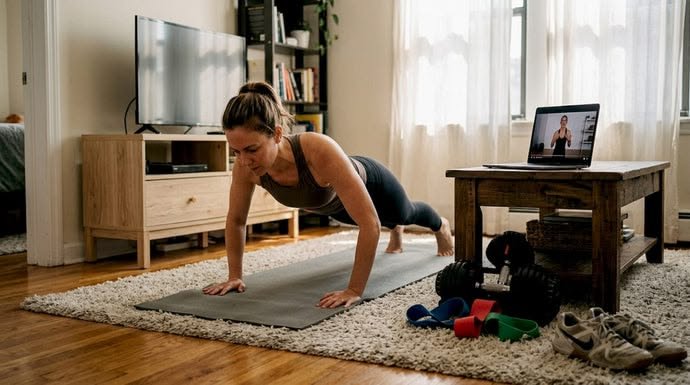
Home workouts have one huge advantage over the gym: there is no commute. They also have one big weakness. Without a coach or a class schedule, it is easy to spend twenty minutes scrolling for the “perfect” routine and then run out of time to actually train. Short fitness videos are full of good ideas, from mobility flows to bodyweight circuits, but a random stream of clips is not a plan.
The fix is to become your own curator. By collecting a small set of exercises you understand and arranging them into a weekly structure, you get the variety of online content with the consistency of a proper programme.
Begin with your goal, not with the feed
Before saving anything, write down what you want from training over the next couple of months. It might be general fitness, better posture after long days at a desk, more strength for hiking or simply a reliable habit. Your goal decides which videos earn a place. A posture-focused plan needs mobility and upper-back work far more than it needs advanced jumping drills.
Pick exercises you can do well
Short clips are great at showing movement, but they move fast. When you find an exercise you like, try it slowly a few times. Can you perform it with good form in the space you have? Does it suit your current level? If the answer is yes, it can join your library. If not, keep looking for an easier variation rather than forcing it.
If you have an injury, a health condition or have been inactive for a long time, check with a doctor or physiotherapist before starting a new routine. Videos cannot see you and cannot adjust for your body.
Saving clips so they are ready when you are
A training session should start with the first exercise, not with a search. Saving your chosen clips to your phone or tablet means they play instantly, even in a garage or garden with poor signal. A browser-based option lets you download TikTok videos from public posts by pasting the link, typically without the watermark and with no app to install.
Fitness creators share their knowledge generously, so treat their work with respect. Keep saved clips for your own training, do not repost them as yours, and if a routine really helps, follow the creator and mention them when you recommend it to friends.
Turn clips into a weekly structure
Once you have a dozen or so exercises, sort them into folders by type and then build a simple week. A balanced example for a beginner to intermediate level might look like this:
- Monday: lower body strength, such as squats, lunges and glute bridges.
- Tuesday: mobility and stretching, twenty minutes.
- Wednesday: upper body and core, such as push-up variations, rows with a resistance band and planks.
- Thursday: rest or a long walk.
- Friday: full-body circuit using favourites from earlier in the week.
- Weekend: an outdoor activity you enjoy and one gentle mobility session.
Create a playlist or folder for each day so that pressing play is all it takes to begin.
Track progress in a simple log
Keep a note on your phone with the date, the exercises, sets, repetitions and how it felt. After a few weeks, you can see whether you are getting stronger, recovering well or need an easier week. Progress is motivating, and a log makes it visible in a way that memory cannot.
Refresh without starting over
Every four to six weeks, swap a few exercises for harder variations or new movements that target the same area. Delete clips you never use. This keeps workouts interesting while the overall structure stays familiar, which is the real secret to sticking with it.
A well-curated home library turns scattered inspiration into a routine. Less time searching, more time moving: that is a trade anyone can benefit from.