

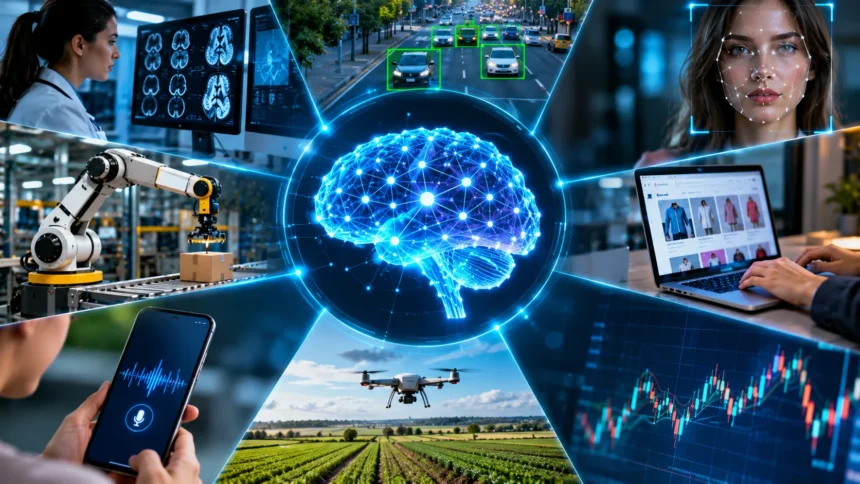
Neural networks are transforming how businesses, industries, and individuals interact with technology. From recognizing faces in photographs to detecting financial fraud, these artificial intelligence systems solve complex problems by learning patterns from data. Understanding neural networks use cases helps explain how modern AI applications improve efficiency, automate tasks, and support smarter decision-making across different sectors.
Today, neural networks power many technologies people use without realizing it. Search engines, medical imaging systems, recommendation platforms, and digital assistants all benefit from neural network technology. This article explores practical neural network applications in the real world, explaining how they work, where they provide value, and what challenges organizations should consider before adopting them.
What Are Neural Networks and How Do They Work?
Neural networks are machine learning models inspired loosely by how biological neurons process information. They contain interconnected computational units arranged in layers that transform input data into useful outputs. During training, these networks adjust their internal parameters to recognize patterns, make predictions, and perform tasks such as classification, language processing, and image recognition.
A typical artificial neural network includes an input layer, one or more hidden layers, and an output layer. The input layer receives information, while hidden layers perform mathematical operations to identify meaningful patterns. The output layer produces results such as a probability, numerical prediction, or classification based on what the network learned during training.
Deep neural networks contain multiple processing layers that allow them to learn complex relationships within large datasets. These systems are especially useful for handling images, speech, text, and other information that traditional programming methods may struggle to interpret. However, their accuracy depends on suitable training data, careful evaluation, and appropriate model design.
Neural Networks in Healthcare and Medical Diagnosis
Healthcare is one of the most promising areas for practical neural network applications. Medical professionals use AI-assisted systems to examine images, analyze patient information, and identify patterns associated with certain diseases. These technologies can support clinical decision-making by highlighting findings that deserve closer examination, although medical expertise remains essential for interpreting results.
For example, convolutional neural networks can analyze X-rays, MRI scans, and CT images to identify suspicious patterns. Some systems help detect abnormalities associated with lung conditions, tumors, and other medical concerns. When properly validated, these tools can support radiologists by prioritizing examinations and assisting with image interpretation in specific clinical settings.
Neural networks can also support personalized healthcare by analyzing patient histories, laboratory results, and other relevant information. Researchers use predictive models to estimate certain health risks and study treatment responses. However, reliable medical applications require clinical validation, privacy safeguards, monitoring, and careful evaluation to reduce errors and unfair outcomes.
Neural Networks in Banking and Financial Fraud Detection
Banks and financial institutions use neural networks to identify suspicious transactions and manage financial risks. Traditional rule-based systems rely on predefined conditions, while machine learning models can recognize more complicated patterns in transaction data. This capability helps financial organizations detect unusual behavior and investigate potential fraud more efficiently.
For example, a payment platform may analyze transaction amounts, account activity, device information, and purchasing patterns. A neural network can identify transactions that differ significantly from established behavior and assign risk scores. Security teams or automated verification systems can then examine suspicious activity before deciding whether additional authentication is necessary.
Neural networks also support credit risk assessment, financial forecasting, and customer behavior analysis. However, financial institutions must consider fairness, explainability, privacy, and applicable regulations when using automated decisions. Combining neural network predictions with responsible oversight helps organizations improve operational efficiency without relying entirely on potentially imperfect algorithms.
Neural Networks in E-Commerce and Product Recommendations
E-commerce companies use neural networks to understand customer preferences and deliver personalized shopping experiences. These systems analyze browsing behavior, purchase histories, product information, and other relevant signals. By recognizing relationships between customers and products, recommendation models can suggest items that shoppers may find useful or interesting.
Imagine an online clothing store where a customer regularly explores casual outfits and sportswear. A recommendation model can identify related products based on previous interactions and patterns observed across similar shopping sessions. The website may then display relevant categories, complementary accessories, or alternative products that match the customer’s interests.
Neural networks also support visual product search, inventory forecasting, and customer service automation. Retailers can use these applications to simplify product discovery and improve operational planning. However, responsible personalization requires transparent data practices, appropriate privacy controls, and careful monitoring to prevent recommendations from becoming repetitive or misleading.
Neural Networks in Natural Language Processing
Natural language processing allows computers to analyze, understand, and generate human language. Neural networks have significantly improved applications such as translation, text classification, summarization, and conversational assistants. Modern language models learn patterns from large amounts of text, enabling them to produce responses and recognize relationships between words and sentences.
For example, customer support platforms can use neural language models to classify incoming questions and suggest appropriate responses. Translation systems can convert content between languages while considering sentence context. These capabilities help organizations communicate with international audiences and manage large volumes of written information more efficiently.
Neural networks also support document analysis, sentiment classification, and automated content organization. Businesses may use these tools to summarize reports or identify common themes in customer feedback. Nevertheless, generated information can contain errors, so important outputs should be reviewed for accuracy, context, confidentiality, and potential bias.
Neural Networks in Image and Facial Recognition
Computer vision is a major field where neural networks have demonstrated practical value. Image recognition systems analyze visual information to identify objects, classify scenes, and detect specific patterns. These capabilities support applications ranging from smartphone photography and quality inspection to accessibility tools and digital image organization.
For example, a smartphone camera may use neural networks to recognize scenes and improve image processing. Other systems can identify products in photographs or detect defects in manufactured components. Facial recognition technology can compare facial features for certain identity verification applications, although its accuracy varies across environments and populations.
Image recognition systems require careful evaluation because visual conditions can affect their performance. Lighting, camera angles, image quality, and training data limitations may lead to inaccurate results. Facial recognition also introduces significant privacy and civil rights concerns, making appropriate consent, safeguards, and restrictions particularly important.
Neural Networks in Manufacturing and Predictive Maintenance
Manufacturing companies use neural networks to improve equipment reliability, product quality, and production efficiency. Industrial machines generate information through sensors that measure vibration, temperature, pressure, and operating conditions. Predictive models can analyze these measurements to identify patterns that may indicate developing mechanical problems or unusual equipment behavior.
For example, a factory may monitor motor vibrations and operating temperatures across production equipment. A trained neural network can detect changes associated with possible component deterioration. Maintenance teams can investigate these warnings and schedule inspections before unexpected failures cause serious production interruptions or expensive repairs.
Neural networks also assist with automated quality inspection and production forecasting. Computer vision systems can identify visible product defects, while forecasting models estimate material demand. Successful implementation requires reliable sensor data, integration with existing processes, and regular evaluation to ensure predictions remain useful as equipment conditions change.
Neural Networks in Transportation and Autonomous Vehicles
Transportation systems increasingly use neural networks to interpret environmental information and support automated driving features. Vehicle cameras, radar, and other sensors collect data about roads, obstacles, pedestrians, and surrounding traffic. Neural network models can process this information to assist with object detection, lane recognition, and driving environment analysis.
For example, advanced driver assistance systems may use neural networks to identify lane markings and nearby vehicles. These models help support features such as lane departure warnings and certain automated assistance functions. However, driver assistance is not equivalent to fully autonomous driving, and drivers must follow the system’s operating requirements.
Neural networks also support traffic forecasting and transportation planning. Logistics companies may analyze historical delivery information and traffic patterns to estimate travel conditions. These applications can improve route planning and resource allocation, although real-world transportation systems still require careful safety testing and dependable human oversight.
Neural Networks in Cybersecurity and Threat Detection
Cybersecurity teams use neural networks to identify suspicious activities across computer networks, applications, and user accounts. Modern organizations generate large volumes of security data that can be difficult to examine manually. Machine learning models help analyze these records and recognize patterns potentially associated with unauthorized access or malicious behavior.
For example, a security monitoring system may evaluate unusual login attempts, unexpected network connections, and changes in account behavior. A neural network can assign risk scores or identify anomalies that deserve further investigation. Security analysts can then review the evidence and determine whether the activity represents a genuine threat.
Neural networks also support malware classification, phishing detection, and security event prioritization. These applications can reduce repetitive analysis and improve the efficiency of security operations. However, AI-based detection systems can produce false alarms and miss unfamiliar attacks, making layered protection and human investigation essential.
Neural Networks in Agriculture and Smart Farming
Agriculture increasingly uses artificial intelligence to improve crop monitoring, resource management, and farming decisions. Neural networks can analyze field images, environmental measurements, and historical agricultural information. These models help farmers recognize patterns related to crop health, soil conditions, and potential production challenges.
For example, image recognition models can examine photographs of plant leaves and identify signs associated with certain diseases. Farmers may use these predictions to decide which crops require closer inspection. Drone imagery and satellite observations can also help monitor vegetation patterns across large agricultural areas.
Neural networks support irrigation planning, crop yield estimation, and precision agriculture applications. By combining weather information, soil measurements, and plant observations, predictive models can help farmers manage resources more effectively. However, performance depends on local conditions, suitable training data, and accurate interpretation of model recommendations.
Neural Networks in Energy Management and Forecasting
Energy providers use neural networks to forecast electricity demand and improve the management of complex energy systems. Electricity consumption changes according to weather, economic activity, time of day, and seasonal patterns. Neural network models can identify relationships within historical measurements and estimate future demand under different conditions.
For example, an electricity provider may combine temperature forecasts with past consumption information to predict demand during hot summer afternoons. These estimates help system operators plan electricity generation and manage available resources. More accurate predictions can support dependable service while reducing unnecessary operational inefficiencies.
Neural networks can also help forecast solar and wind energy production using environmental measurements. Renewable energy output varies because sunlight and wind conditions change throughout the day. Predictive models support planning by estimating likely energy availability, although operators must still account for uncertainty and unexpected environmental changes.
Neural Networks in Education and Personalized Learning
Educational platforms use neural networks to analyze learning patterns and support personalized instruction. Students differ in their understanding, pace, and preferred learning activities. AI-powered learning systems can examine assessment results and activity data to recommend exercises that address particular knowledge gaps or reinforce previously studied concepts.
For example, an online mathematics platform may recognize that a student consistently struggles with fractions. A recommendation system can suggest additional practice questions or explanatory materials related to that topic. Teachers can review this information and provide guidance based on the student’s actual learning needs.
Neural networks also support automated feedback, learning resource recommendations, and certain accessibility features. Speech recognition can help produce captions, while language tools can assist with reading and writing activities. However, educational AI should complement teachers rather than replace professional judgment, especially when decisions affect student progress or opportunities.
Neural Networks in Marketing and Customer Analytics
Marketing teams use neural networks to understand customer behavior and evaluate patterns across digital campaigns. These models can analyze website interactions, purchase histories, and engagement information. Businesses use predictive insights to improve audience segmentation, identify potential customer needs, and make more informed marketing decisions.
For example, an online subscription service may analyze customer activity to identify accounts showing signs of declining engagement. A neural network can estimate the likelihood of cancellation based on historical behavioral patterns. Marketing teams can use these insights to develop relevant support or retention initiatives rather than sending identical messages to every customer.
Neural networks can also assist with demand forecasting, campaign performance analysis, and content recommendations. However, predictions should be evaluated against meaningful business outcomes instead of treated as guaranteed results. Responsible marketing applications require appropriate consent, careful data handling, and attention to fairness and consumer expectations.
Neural Networks in Entertainment and Streaming Services
Streaming services use neural networks to recommend movies, television programs, music, and other digital content. These systems analyze viewing history, interaction patterns, and relationships between different content items. Recommendation models help users discover material that may match their interests without searching through extensive entertainment libraries.
For example, a streaming platform may recognize that a viewer regularly chooses documentaries about science and technology. Its recommendation system can identify related titles and suggest programs with similar characteristics. The platform may also consider viewing completion rates and other interaction signals to refine future recommendations.
Neural networks support additional entertainment applications, including subtitle generation, content classification, and certain visual effects workflows. These technologies help organizations manage large media collections and improve content accessibility. However, platforms must address recommendation diversity, data privacy, and potential inaccuracies when applying automated systems to user experiences.
Benefits and Challenges of Neural Network Applications
One important benefit of neural networks is their ability to identify complex patterns within large datasets. They can support automation, forecasting, classification, and decision-making across many industries. When appropriately trained and evaluated, these models help organizations process information efficiently and perform tasks that would otherwise require substantial manual effort.
Despite these advantages, neural networks present challenges related to data quality, computational requirements, and interpretability. Complex models may require considerable resources for development and deployment. Their predictions can also become unreliable when real-world conditions differ significantly from the information used during training.
Organizations must also consider privacy, security, fairness, and ongoing model maintenance. Biased training data may produce unfair outcomes, while poorly protected systems can expose sensitive information. Successful implementation depends on clear objectives, suitable datasets, human oversight, and continuous performance monitoring rather than simply adopting increasingly complex AI models.
Conclusion
Real-world neural networks use cases demonstrate how artificial intelligence supports innovation across healthcare, finance, retail, education, manufacturing, and transportation. These systems recognize complex patterns, automate selected tasks, and generate predictions from available information. Their practical value comes from solving clearly defined problems rather than replacing every existing process.
Neural networks offer opportunities to improve efficiency, personalize services, detect abnormalities, and support better decisions. However, their effectiveness depends on reliable data, appropriate model selection, and responsible implementation. Businesses should carefully evaluate their needs before investing in neural network technologies and ensure that potential benefits justify the operational requirements.
As artificial intelligence continues to develop, neural networks are likely to support an expanding range of applications. Organizations that combine technical innovation with privacy protection, meaningful evaluation, and human expertise will be better prepared to use these tools responsibly. Understanding their practical strengths and limitations is the foundation for making informed decisions about AI adoption.
Frequently Asked Questions (FAQs)
What are the most common neural networks use cases?
Common neural network use cases include image recognition, speech processing, fraud detection, product recommendations, medical imaging analysis, and demand forecasting. These applications use learned patterns to support predictions, classification, automation, and decision-making.
How are neural networks used in everyday life?
Neural networks support everyday technologies such as smartphone cameras, search engines, translation applications, streaming recommendations, and voice assistants. They help process information, recognize patterns, and personalize digital experiences based on available data.
Which industries benefit most from neural networks?
Healthcare, finance, retail, manufacturing, transportation, agriculture, and technology benefit from neural network applications. Their usefulness depends on the availability of reliable data, clear business objectives, and appropriate evaluation methods.
What is the difference between neural networks and machine learning?
Machine learning is a broader field involving algorithms that learn patterns from data. Neural networks are one family of machine learning models that use interconnected computational layers to process information and generate predictions.
Are neural networks always accurate?
No, neural networks are not always accurate. Their performance depends on training data quality, model design, evaluation methods, and real-world conditions. Regular testing, monitoring, and human oversight help reduce errors and improve reliability.