
Knee strengthening exercises at home can help improve joint stability, support everyday movement, and make activities such as walking, climbing stairs, and standing more comfortable. The knee is an important weight-bearing joint that depends on surrounding muscles for support and controlled movement. Strengthening the quadriceps, hamstrings, glutes, and calf muscles can contribute to better lower-body function and overall mobility.
You do not necessarily need expensive equipment or a gym membership to strengthen the muscles around your knees. Many effective exercises use body weight, a sturdy chair, or a simple resistance band. However, performing exercises with proper form and choosing movements that match your abilities are essential for avoiding unnecessary discomfort.
This guide explains the best knee strengthening exercises at home, their benefits, correct techniques, common mistakes, and practical safety tips. Whether you want to improve everyday mobility or build better lower-body strength, understanding these exercises can help you develop a comfortable and sustainable routine.
Why Knee Strengthening Exercises Are Important
The knees support many everyday activities, including walking, sitting, standing, bending, and climbing stairs. Strong surrounding muscles help distribute forces across the joints and provide stability during movement. When these muscles become weak, ordinary activities may feel more demanding, particularly for people recovering from inactivity or experiencing reduced lower-body strength.
Knee strengthening exercises primarily target the quadriceps, hamstrings, glutes, and calf muscles. Each muscle group contributes to controlled movement and joint support. The quadriceps help straighten the knee, while the hamstrings assist with bending and controlling leg movement. Strong hip muscles also help maintain comfortable alignment during many lower-body activities.
Regular strengthening can improve functional ability and help people perform daily tasks with greater confidence. Exercise may also be part of managing certain knee conditions when recommended by a healthcare professional. However, strengthening does not correct every source of knee pain, and persistent symptoms should be assessed before beginning a demanding exercise program.
Benefits of Doing Knee Exercises at Home
One major benefit of home knee exercises is convenience because they can fit into an ordinary daily routine. Many movements require only a small amount of space and minimal equipment. This accessibility allows people to practice regularly without arranging transportation or relying on specialized exercise facilities.
Home exercises can help improve muscle strength, balance, and movement control when performed consistently. Strengthening the legs and hips may make ordinary activities such as getting out of a chair or walking upstairs feel easier. Gradual improvements in muscular endurance can also support comfort during longer periods of everyday physical activity.
Another advantage is the ability to adjust exercises according to individual ability and available equipment. Beginners can start with supported movements before progressing to more challenging variations. People with existing knee injuries, recent surgery, significant swelling, or unexplained pain should seek professional guidance because some exercises may require modification or temporary avoidance.
Understanding the Muscles That Support Your Knees
The quadriceps are a group of four muscles located along the front of the thigh. Their main role is to straighten the knee and help control movements such as standing up or walking downstairs. Exercises that strengthen these muscles can improve the leg’s ability to manage everyday weight-bearing activities.
The hamstrings are located along the back of the thigh and help bend the knee and move the hip. They also contribute to controlling leg motion during walking and other activities. Balanced strengthening of the quadriceps and hamstrings helps support coordinated lower-body movement rather than focusing on only one muscle group.
The glutes and calf muscles also play important roles in knee function. Gluteal muscles help stabilize the hips and control leg positioning, while the calves contribute to walking and ankle movement. Strengthening these surrounding muscles can improve overall lower-body mechanics and support more comfortable movement during daily activities.
How to Warm Up Before Knee Strengthening Exercises
Warming up prepares the muscles and joints for activity by gradually increasing movement and circulation. Begin with several minutes of comfortable walking around the house or marching gently in place. Choose movements that do not aggravate existing symptoms, and avoid immediately starting challenging exercises when your muscles still feel stiff.
Gentle knee bends, ankle movements, and relaxed leg motions can help you become comfortable with the movements ahead. Keep the exercises slow and controlled rather than forcing the knee into an uncomfortable position. A warm-up should gradually prepare the body for exercise without producing sharp pain, increasing swelling, or unusual instability.
The length of a warm-up depends on your physical condition and the planned activity. Around five to ten minutes of easy movement is often a practical starting point. If you experience significant pain, dizziness, or worsening symptoms, stop the activity and seek medical guidance rather than attempting to push through discomfort.
Straight Leg Raises for Quadriceps Strength
Straight leg raises are a beginner-friendly exercise that strengthens the quadriceps without requiring repeated knee bending. Lie comfortably on your back with one knee bent and the opposite leg straight. Keep your lower back in a relaxed position and gently tighten the thigh muscles of the straight leg before beginning.
Slowly lift the straight leg a short distance from the floor while keeping the knee extended. Hold briefly if comfortable, then lower the leg with control instead of letting it drop. The movement should feel manageable, and the goal is to activate the thigh muscles without creating pain in the knee or lower back.
Beginners may try one set of eight to ten comfortable repetitions on each side, adjusting the amount to their ability. Avoid lifting the leg excessively high or arching the lower back during the movement. If the exercise causes discomfort, reduce the range or ask a physical therapist whether another quadriceps exercise would be more appropriate.
Seated Knee Extensions for Better Leg Strength
Seated knee extensions provide a simple way to strengthen the muscles at the front of the thigh. Sit upright on a stable chair with your feet resting comfortably on the floor. Keep your shoulders relaxed and avoid leaning backward excessively, allowing your thigh muscles to control the movement.
Slowly straighten one knee by lifting the lower leg forward until you reach a comfortable position. Pause briefly before lowering the foot toward the floor with control. The movement should remain smooth and steady, without kicking quickly or forcing the knee into a position that causes discomfort.
Start with a manageable number of repetitions and gradually increase them as the exercise becomes easier. For some people, eight to twelve repetitions per leg may be a reasonable starting range. Avoid adding ankle weights until you can perform the movement comfortably and have determined that extra resistance is appropriate.
Mini Squats for Knee Stability
Mini squats strengthen several lower-body muscles, including the quadriceps and glutes, while using a smaller range of motion than traditional squats. Stand with your feet approximately hip-width apart near a stable counter or supportive surface. Keep your chest comfortably upright and your weight balanced across both feet.
Slowly bend your knees and hips as though beginning to sit down, using only a shallow and comfortable range. Keep your knees generally aligned with the direction of your toes rather than allowing them to collapse inward. Return to standing by pressing through your feet and straightening your legs without sudden movements.
Beginners can start with a few controlled repetitions before progressing according to comfort and strength. Avoid squatting deeply when it produces knee pain or when your balance feels uncertain. A sturdy support can make the exercise more accessible, especially for people who are still developing confidence in their lower-body control.
Wall Sits for Quadriceps Endurance
Wall sits are an isometric exercise that challenges the thigh muscles by holding a supported position. Stand with your back against a stable wall and place your feet slightly forward. Gradually slide downward only until you reach a comfortable shallow knee bend, keeping your back supported throughout the movement.
Hold the position briefly while breathing normally and maintaining even pressure through your feet. You do not need to lower into a deep seated position to activate the quadriceps. After the hold, slowly return to standing and allow your muscles to rest before deciding whether another repetition is comfortable.
Begin with short holds, such as five to ten seconds, rather than immediately attempting long periods. Wall sits can place considerable demand on the knees, particularly at deeper angles. If the exercise causes pain, swelling, or discomfort that continues afterward, choose a gentler alternative and consider seeking professional advice.
Glute Bridges for Hip and Knee Support
Glute bridges strengthen the muscles around the hips while also involving the hamstrings and core. Lie on your back with both knees bent and your feet flat on the floor. Position your feet comfortably apart and keep your arms relaxed beside your body before beginning the movement.
Gently tighten your abdominal and gluteal muscles, then lift your hips until your body forms a comfortable line from shoulders toward knees. Avoid arching your lower back or pushing your hips excessively high. Pause briefly before lowering your hips slowly to the floor while maintaining control.
Glute bridges are useful because strong hip muscles contribute to overall leg stability during walking and standing. Start with a few comfortable repetitions and increase gradually as your movement improves. If the exercise causes hamstring cramping, knee pain, or lower-back discomfort, adjust your foot position or seek guidance.
Standing Hamstring Curls for Knee Flexibility and Strength
Standing hamstring curls strengthen the muscles at the back of the thigh and encourage controlled knee bending. Stand upright near a sturdy chair or counter for balance. Keep your feet comfortably positioned and maintain a relaxed posture without leaning excessively forward or backward.
Slowly bend one knee, bringing your heel toward your buttocks only as far as feels comfortable. Keep your thighs relatively aligned and avoid swinging the leg or twisting your hips. Lower the foot gently to the floor and repeat the movement with steady control rather than attempting rapid repetitions.
Beginners can start with approximately eight to twelve comfortable repetitions on each leg. The exercise should activate the back of the thigh without producing sharp pain in the knee. If balancing on one leg feels difficult, maintain contact with a stable support and reduce the movement range as needed.
Step-Ups for Everyday Knee Function
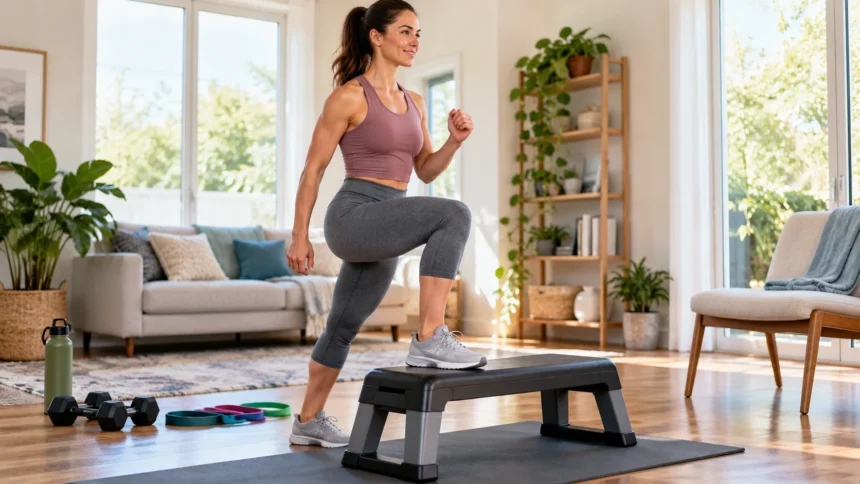
Step-ups strengthen the quadriceps, glutes, and other muscles involved in climbing stairs. Begin with a low, stable step that does not require excessive knee bending. Stand close to the step and use a sturdy handrail or nearby support if you need additional balance.
Place one foot securely on the step and slowly transfer enough weight to lift your body upward. Keep your movement controlled and avoid pushing the knee into an uncomfortable position. Step down carefully, maintaining balance and allowing the muscles to control the descent rather than dropping quickly.
Start with a small number of repetitions on each side and increase gradually as your strength improves. A lower step is often more suitable for beginners than a high platform. Stop if the knee gives way, becomes painful, or feels unstable, since these symptoms require greater attention than ordinary muscular effort.
Standing Calf Raises for Lower-Leg Strength
Calf raises strengthen the muscles along the back of the lower leg and support everyday walking movements. Stand upright behind a sturdy chair or near a stable counter, keeping your feet approximately hip-width apart. Maintain a relaxed posture and use the support to assist with balance.
Slowly lift your heels from the floor until you are standing comfortably on the balls of your feet. Pause briefly at the top before lowering your heels with control. Avoid bouncing or rolling your ankles excessively outward or inward during the movement.
Begin with approximately eight to twelve comfortable repetitions, adjusting the number according to your balance and muscle strength. Calf raises can be modified by using a smaller range of motion when necessary. Strong calf muscles contribute to lower-body function, although this exercise does not directly address every cause of knee discomfort.
Side-Lying Leg Raises for Hip Stability
Side-lying leg raises strengthen the hip abductor muscles, which help control leg positioning during walking and standing. Lie comfortably on one side with your legs extended or slightly bent according to your comfort. Keep your hips stacked and support your head with your lower arm or a pillow.
Slowly lift the upper leg a short distance while keeping the knee relatively straight and the toes facing forward. Avoid rolling your body backward or lifting the leg higher than you can comfortably control. Lower it gradually, focusing on steady movement rather than the height achieved.
Begin with a manageable number of repetitions before changing sides. You may notice muscular effort along the outer hip, which is expected during this exercise. Strong hip muscles can support lower-body control, but pain in the knee, hip, or lower back indicates that the movement should be modified or stopped.
Common Mistakes During Knee Strengthening Exercises
One common mistake is increasing exercise difficulty too quickly before the muscles have adapted to the movement. Adding resistance, repetitions, or deeper knee bends prematurely can create unnecessary discomfort. Gradual progression allows strength to develop while giving the body time to respond to the demands of a new routine.
Another mistake is using uncontrolled movements, particularly during squats, step-ups, and seated knee extensions. Moving too quickly can reduce control and make it difficult to recognize when an exercise becomes uncomfortable. Performing repetitions slowly and maintaining steady positioning generally makes it easier to develop useful muscular strength.
Ignoring pain or continuing through worsening symptoms is also an important mistake to avoid. Mild muscular effort is expected, but sharp pain, increasing swelling, or joint instability should not be treated as normal exercise sensations. These symptoms may indicate that an exercise is unsuitable or that medical evaluation is necessary.
How Often Should You Do Knee Strengthening Exercises?
The ideal frequency depends on your current strength, physical condition, and the exercises you choose. For many beginners, performing a short strengthening routine two or three days per week can provide a manageable starting point. Allowing recovery time between more demanding sessions helps the surrounding muscles adapt without unnecessary fatigue.
Exercises can be organized into a simple routine involving quadriceps, hamstrings, glutes, and calf movements. You do not need to perform every exercise during a single session to build useful strength. Selecting a few appropriate movements and completing them consistently is often more practical than attempting an extensive routine that becomes difficult to maintain.
As strength improves, repetitions or resistance can gradually increase when movements remain comfortable and controlled. People recovering from injuries or managing diagnosed knee conditions may need an individualized schedule. A qualified physical therapist can help determine the safest frequency, exercise selection, and progression based on specific recovery goals.
When to Avoid Knee Strengthening Exercises
Certain symptoms indicate that knee strengthening exercises should be delayed until a healthcare professional has assessed the problem. Significant swelling, severe pain, joint deformity, or inability to bear weight may suggest an injury requiring medical attention. Attempting demanding exercises under these circumstances can aggravate the condition and delay appropriate treatment.
People who have recently undergone knee surgery should follow the rehabilitation instructions provided by their healthcare team. Recovery programs vary according to the procedure and individual healing progress. Exercises that are suitable for general strengthening may be inappropriate during specific rehabilitation stages, even when they appear simple or low impact.
Persistent instability, repeated knee locking, or symptoms following a significant fall also deserve medical assessment. If the knee becomes red, hot, and swollen, especially alongside fever, seek urgent medical attention. These warning signs should not be managed through exercise alone because they may indicate conditions requiring prompt treatment.
Tips for Making Knee Exercises More Effective
Consistency is more important than attempting difficult exercises before your muscles are ready. Start with movements that feel comfortable and allow you to maintain good control throughout each repetition. Gradually adding repetitions or resistance can provide an appropriate challenge when the initial routine becomes manageable.
A sturdy chair, resistance band, or low step can make home exercise sessions more varied without requiring expensive equipment. However, equipment should remain stable and suitable for the intended movement. Choosing a safe exercise area with enough space and good footing also helps reduce unnecessary balance problems.
Pay attention to how your knees respond during exercise and later in the day. Mild muscular fatigue may be normal, but worsening pain or swelling indicates that adjustments are needed. If symptoms repeatedly occur, a healthcare professional can help identify suitable alternatives and determine whether an underlying condition requires treatment.
Conclusion
Knee strengthening exercises at home can help improve muscular support, joint stability, and confidence during everyday movement. Exercises such as straight leg raises, mini squats, glute bridges, and standing hamstring curls target important lower-body muscle groups. When performed with appropriate technique, these movements can contribute to better functional strength and mobility.
Building stronger knees requires consistency, gradual progression, and attention to individual comfort. Starting with manageable exercises allows the surrounding muscles to adapt without placing unnecessary demands on the joints. Proper form, comfortable movement ranges, and adequate recovery are important parts of developing a sustainable strengthening routine.
Although home exercises can be helpful, they are not a substitute for medical assessment when significant symptoms occur. Persistent pain, increasing swelling, instability, or difficulty bearing weight should be evaluated by a healthcare professional. With suitable exercise choices and appropriate guidance, many people can improve lower-body strength and support more comfortable daily activities.
Frequently Asked Questions (FAQs)
What are the best knee strengthening exercises at home?
Straight leg raises, seated knee extensions, mini squats, glute bridges, and step-ups are useful options. The best exercises depend on your strength, mobility, knee condition, and ability to perform movements comfortably.
How can I strengthen my knees without equipment?
You can strengthen the muscles around your knees using bodyweight exercises such as straight leg raises, mini squats, glute bridges, and calf raises. Begin gently and increase difficulty gradually.
How often should I do knee strengthening exercises?
Many beginners can start with strengthening exercises two or three days per week, allowing recovery between sessions. The appropriate schedule depends on fitness level, symptoms, exercise intensity, and individual medical needs.
Are squats good for strengthening weak knees?
Squats can strengthen the quadriceps and glutes when performed with suitable technique and a comfortable range of motion. Shallow, supported squats may be more appropriate for beginners than deep squats.
Can knee strengthening exercises reduce knee pain?
Strengthening may help reduce discomfort associated with certain conditions by improving muscular support and function. However, knee pain has many causes, so persistent or worsening symptoms should be evaluated before continuing exercise.