
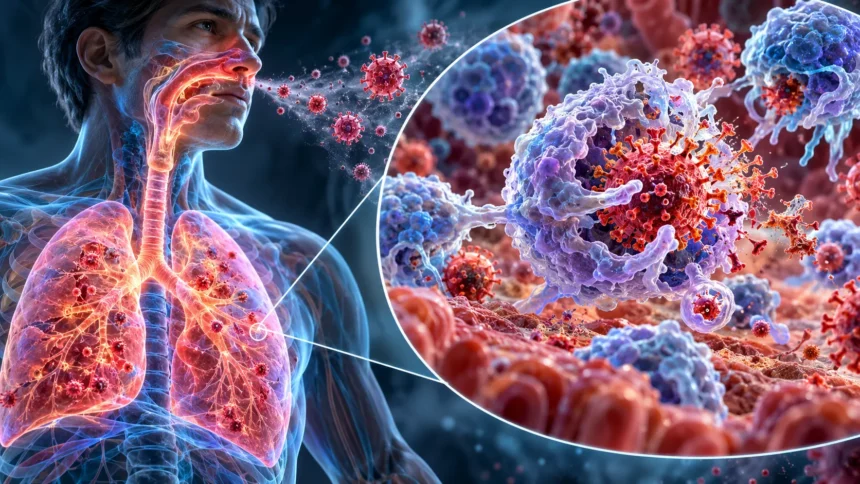
The human body faces countless microorganisms every day, including viruses, bacteria, fungi, and other potential causes of infection. Despite this constant exposure, people do not become sick every time they encounter a germ. This protection comes from the immune system, a complex network of cells, tissues, organs, and biological processes that recognize and respond to harmful microorganisms.
Understanding how the immune system fights viruses and infections helps explain what happens inside the body during illness. From protective barriers and white blood cells to antibodies and immune memory, different defenses work together to control infections. These responses help the body recognize threats, limit their spread, eliminate infected cells, and recover while building protection against certain future infections.
1. What Is the Immune System and How Does It Work?
The immune system is the body’s natural defense network that protects against potentially harmful microorganisms and other threats. It consists of specialized cells, proteins, tissues, and organs that communicate to identify and control infections. Important components include white blood cells, lymph nodes, bone marrow, the spleen, and protective tissues throughout the respiratory and digestive systems.
When a microorganism enters the body, immune defenses attempt to recognize whether it represents a potential threat. Some protective responses begin almost immediately, while others require time to identify specific characteristics of the invading organism. This coordinated process helps the body defend itself against many different types of infections without needing exactly the same response for every microorganism.
The immune system also distinguishes between the body’s own healthy cells and many foreign substances. This ability is important because immune defenses must respond to harmful organisms without unnecessarily damaging normal tissues. Although the system is highly sophisticated, it is not perfect, and infections, allergies, autoimmune conditions, or other immune-related problems can sometimes occur.
2. How the Body’s First Line of Defense Blocks Germs
Before viruses or bacteria reach internal tissues, they must overcome several protective barriers. The skin provides an important physical defense because its outer layers make it difficult for many microorganisms to enter the body. Healthy skin also contains natural substances and beneficial microorganisms that contribute to protection against certain harmful organisms.
The respiratory system has additional defenses that help prevent microorganisms from reaching vulnerable tissues. Mucus traps some inhaled particles and germs, while tiny hairlike structures called cilia move trapped material toward areas where it can be removed. Sneezing and coughing can also help clear irritants and infectious particles from parts of the respiratory tract.
The digestive system provides another protective environment through stomach acid, digestive secretions, and naturally occurring microorganisms. These defenses can reduce the survival of certain germs entering through food or water. However, some pathogens possess characteristics that allow them to survive these barriers, enter body tissues, and trigger a stronger immune response.
3. How Innate Immunity Responds Quickly to Infections
Innate immunity is the body’s rapid defense system that begins responding when potentially harmful microorganisms enter tissues. It includes protective barriers, immune cells, and chemical signals that recognize common characteristics of infectious organisms. Unlike highly specific immune responses, innate defenses can react to broad patterns associated with many different bacteria, viruses, and fungi.
White blood cells known as neutrophils and macrophages are important participants in early immune defense. They can recognize and engulf certain microorganisms through a process called phagocytosis. After surrounding these organisms, the cells use internal mechanisms to break them down, helping control infections and remove some damaged cellular material from affected tissues.
Another important component of innate immunity involves natural killer cells, which help identify and destroy certain infected or abnormal cells. These cells can respond before the body develops a highly specific immune response against a newly encountered pathogen. Together, these rapid defenses help limit infections while other immune cells prepare more targeted protection.
4. Why Inflammation and Fever Occur During Infections
Inflammation is a natural immune response that occurs when tissues become infected, injured, or exposed to certain harmful substances. Immune cells release chemical signals that increase blood flow and help recruit additional protective cells to affected areas. This process can produce familiar symptoms such as redness, warmth, swelling, and discomfort, depending on the location.
Inflammation helps immune cells reach infected tissues and begin controlling the microorganisms responsible for illness. Blood vessels become more responsive to immune signals, allowing protective proteins and cells to move into surrounding tissues. Although inflammation is useful during infection, excessive or prolonged inflammatory activity can also contribute to tissue damage and additional health problems.
Fever is another response that may develop when immune signals influence the body’s temperature-regulating system. A higher temperature can affect certain microorganisms and change how immune processes operate, although fever alone does not eliminate infections. Because fever can have many causes, its significance depends on the person’s age, symptoms, medical history, and overall condition.
5. How the Immune System Recognizes Virus-Infected Cells
Viruses cause infections by entering suitable living cells and using their internal machinery to produce additional viral particles. Unlike bacteria, viruses cannot reproduce independently in the same way as living bacterial cells. This creates a particular challenge for immune defenses because infected cells may initially resemble ordinary healthy cells from the outside.
When cells detect signs of viral infection, they can release signaling proteins called interferons. These proteins help neighboring cells activate antiviral defenses and communicate the presence of a possible infection. Interferons also influence immune cell activity, supporting a coordinated response that can reduce viral replication and help the body recognize affected tissues.
Certain immune cells examine protein fragments displayed on the surfaces of other cells. These fragments can provide information about what is happening inside a cell, including whether viral proteins are present. By recognizing unusual or infection-related signals, immune defenses can identify cells that require attention and begin more targeted responses against the invading virus.
6. How T Cells Help Eliminate Viral Infections
T cells are specialized white blood cells that play important roles in adaptive immunity. This branch of the immune system develops targeted responses against specific features of microorganisms. T cells begin developing in the bone marrow and mature in the thymus, where they undergo processes that help prepare them for their defensive functions.
Cytotoxic T cells, commonly called CD8 T cells, recognize certain infected cells displaying viral protein fragments. When properly activated, these cells can trigger the controlled destruction of infected cells, helping prevent continued viral production. This response is particularly important because it targets cells already carrying viruses rather than only attacking viral particles outside cells.
Helper T cells, often called CD4 T cells, coordinate important parts of the immune response through communication with other immune cells. They help activate certain B cells, support other T cells, and influence immune activity through signaling molecules. These interactions allow the body to develop a more organized response against infectious organisms.
7. How B Cells and Antibodies Fight Viruses
B cells are another important group of white blood cells involved in adaptive immune protection. When appropriately activated, some B cells develop into plasma cells that produce antibodies. These specialized proteins recognize particular molecular features called antigens, which may appear on viruses, bacteria, or other substances encountered by the immune system.
Antibodies can protect against certain viruses by attaching to their surface structures and interfering with their ability to enter healthy cells. This process is known as neutralization and can reduce the opportunity for viruses to establish additional infections. Antibodies may also help other immune components recognize and remove infectious particles more efficiently.
Different antibodies perform different functions, and their effectiveness depends on the microorganism involved. Some circulate through blood and tissues, while others help protect surfaces such as the respiratory and digestive tracts. Together with T cells and innate defenses, antibodies contribute to a coordinated response that helps control infections and supports recovery.
8. How the Immune System Fights Bacterial and Fungal Infections
Although viruses receive considerable attention, the immune system also protects against bacterial and fungal infections. These microorganisms differ in structure and behavior, so the body uses different combinations of defensive mechanisms. Some bacteria remain outside human cells, while others can survive within tissues or certain immune cells, requiring more specialized responses.
Neutrophils and macrophages help control many bacterial and fungal infections by engulfing microorganisms and releasing antimicrobial substances. Another defense mechanism involves the complement system, a collection of proteins that can mark certain microbes for removal and support inflammation. Specific complement activities can also damage the membranes of susceptible bacteria.
Antibodies and T cells provide additional support depending on the infectious organism and affected tissues. For some bacterial infections, appropriately prescribed antibiotics help eliminate susceptible bacteria while immune defenses continue working. Antifungal medicines may be necessary for certain fungal infections, demonstrating that successful treatment depends on identifying the type and severity of illness.
9. How Immune Memory Protects Against Future Infections
One remarkable feature of adaptive immunity is its ability to remember certain microorganisms after an infection or vaccination. During an immune response, some activated B cells and T cells develop into longer-lasting memory cells. These cells preserve information about specific antigens, allowing the immune system to respond differently during later encounters.
When the body encounters a familiar pathogen again, memory cells can help initiate a faster and more targeted response. In some situations, this response prevents noticeable illness, while in others it reduces infection severity. The degree and duration of protection depend on the microorganism, previous immune exposure, and individual biological factors.
Vaccines use the principles of immune memory to help prepare the body against selected infectious diseases. They introduce an antigen or instructions that allow the immune system to recognize a particular threat without requiring the disease itself. Vaccination can stimulate protective antibodies and memory cells, although effectiveness and duration vary between vaccines and infections.
10. Why Some Infections Take Longer to Recover From
Recovery time varies because different pathogens affect the body in different ways. Some infections remain localized, while others spread through multiple tissues or trigger stronger immune responses. The amount of infectious material, the affected organs, and the body’s existing defenses can all influence how quickly symptoms begin improving.
Individual health also plays an important role in the course of an infection. Age, previous exposure, vaccination history, underlying medical conditions, and medicines that affect immunity may influence recovery. Some people control an infection with relatively mild symptoms, while others develop complications that require professional medical assessment and treatment.
Symptoms can sometimes continue even after the number of infectious organisms has decreased significantly. Inflammation, irritated tissues, and the body’s repair processes may take additional time to settle. Persistent, worsening, or unusual symptoms should not automatically be considered normal recovery because they may require evaluation to identify complications or another underlying condition.
11. How to Support Healthy Immune System Function
Supporting normal immune function involves maintaining everyday habits that contribute to overall health. Eating a varied diet helps provide nutrients required for immune cell development and other biological processes. Adequate sleep, regular physical activity, and appropriate hydration also support the body’s normal functioning, although no single habit guarantees protection against every infection.
Good hygiene and infection prevention practices can reduce unnecessary exposure to infectious microorganisms. Washing hands, following food safety recommendations, maintaining appropriate ventilation, and keeping recommended vaccinations current are useful protective measures. These habits work alongside the immune system rather than replacing its natural defenses or eliminating the possibility of illness.
It is also important to recognize when medical advice is necessary instead of relying entirely on home care. Difficulty breathing, confusion, severe dehydration, or rapidly worsening symptoms require urgent medical attention. People with weakened immune defenses or other significant health conditions may need earlier assessment because certain infections can become more serious.
Conclusion
The immune system protects the body through a complex combination of physical barriers, specialized cells, proteins, and communication signals. Skin, mucus, innate immune cells, and inflammatory responses provide early protection against harmful microorganisms. When more targeted defenses are needed, T cells and B cells help recognize specific threats, control infected cells, and produce antibodies that support infection management.
Understanding how the immune system fights viruses and infections also explains why recovery differs between illnesses and individuals. Some immune responses begin quickly, while others require time to develop targeted protection. Immune memory helps the body respond to certain familiar pathogens, and vaccination uses this important biological capability to reduce the risks associated with selected infectious diseases.
A healthy immune system depends on coordinated biological processes rather than one special food, product, or activity. Balanced nutrition, appropriate sleep, hygiene, vaccination, and access to medical care all contribute to protecting health. By understanding how immune defenses operate, people can make more informed decisions about infection prevention, symptoms, and the importance of appropriate treatment.
Frequently Asked Questions (FAQs)
1. How does the immune system fight viruses in the body?
The immune system fights viruses using interferons, natural killer cells, T cells, and antibodies. These defenses help limit viral reproduction, recognize infected cells, neutralize certain viral particles, and support recovery.
2. What are the first signs that the immune system is fighting an infection?
Common signs can include fever, fatigue, swelling, and inflammation, depending on the infection. However, symptoms vary considerably, and some infections cause few noticeable signs despite an active immune response.
3. How do white blood cells protect the body from infections?
White blood cells recognize infectious organisms, engulf certain microorganisms, coordinate immune responses, and destroy some infected cells. Different types perform specialized functions, allowing the body to respond to various viruses, bacteria, and fungi.
4. Does the immune system remember viruses after an infection?
The immune system can develop memory B cells and T cells after encountering certain viruses. These cells may support faster responses during future exposure, although the duration and effectiveness of protection vary.
5. What helps the immune system work properly?
Balanced nutrition, sufficient sleep, regular physical activity, recommended vaccinations, and good hygiene support normal immune function. These habits contribute to overall health but cannot guarantee that a person will avoid infections.