

Most people compare mummy makeover quotes by looking at the total. A more useful question comes first: are you pricing one long operation or two shorter ones? That single decision affects your safety, your recovery, your time away from your children and, in the end, what you actually spend.
If “mummy makeover Turkey cost” is the phrase you keep searching, this guide will help you turn those results into a budget you can trust. Prices change regularly, so current starting figures are linked in the sources at the end. What follows is everything a headline price cannot tell you.
What You Are Actually Pricing
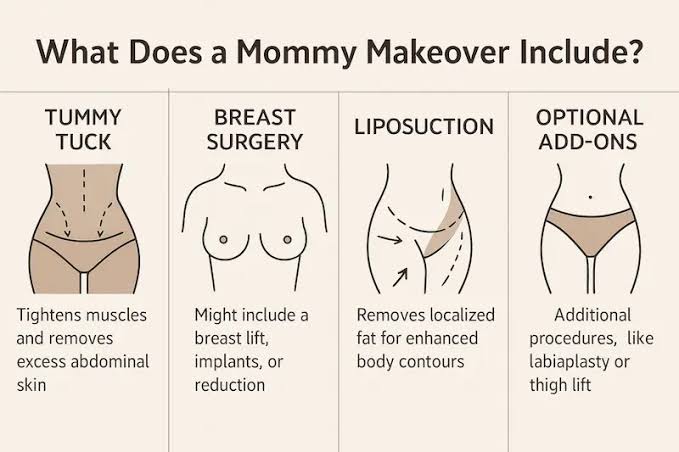
A mummy makeover is not a single procedure. It is a combination chosen for your body, most often built from:
- A tummy tuck to remove loose skin and, where needed, repair separated abdominal muscles
- Breast surgery, which may be a lift, an augmentation with implants, or both
- Liposuction to refine areas such as the flanks
Every element adds operating time, and operating time drives cost: the surgeon’s fee, anaesthesia, theatre use and often an extra night in hospital. That is why two women can receive very different quotes for something both clinics call a mummy makeover. Before comparing anything, make sure each quote lists exactly which procedures are included and whether it is treatment only or a package with accommodation and transfers. Some patients also ask about adding rib remodeling to narrow the waist further, but it is a separate, specialized procedure that should always appear as its own line on the quote.
Why Combining Is Not Automatically a Saving
Combining procedures means one anaesthetic, one hospital stay and one recovery. On paper, that looks cheaper. The research suggests the trade-off deserves a careful conversation.
A study published in Plastic and Reconstructive Surgery analysed 25,478 abdominoplasties recorded in the CosmetAssure insurance database. Major complications occurred in 4.0% of tummy tuck patients, compared with 1.4% across other cosmetic procedures. The rate was 3.1% for a tummy tuck performed on its own and rose to as much as 10.4% when it was combined with body contouring and liposuction. After adjusting for other factors, combined procedures carried a 50% higher relative risk of major complications. The most common were haematoma, infection and blood clots, and other risk factors included being 55 or older and having a BMI of 30 or above.
Around two in three abdominoplasties in that study were combined with another procedure, so this is not an unusual scenario. The authors advised that combined procedures should be considered carefully in higher-risk patients.
Remember too that a complication is the most expensive outcome of all: extra treatment, a longer stay, more time off and, if you travelled, changed flights.
The Timing Questions That Come Before Money
Surgeons usually ask you to wait until a few conditions are in place, because each one protects your result:
- Your family is complete. A future pregnancy can stretch the skin and muscles again and undo much of a tummy tuck.
- Your weight is stable. Most surgeons want to see several months at a steady weight before body contouring.
- Breastfeeding has finished and your breasts have had time to settle, so the size and shape your surgeon plans around are the ones you will keep.
- You are not smoking. Nicotine slows wound healing, and many surgeons require you to stop for several weeks before and after surgery.
If any of these are not yet true, the most cost-effective decision may simply be to wait.
Single-Stage or Staged: The Honest Trade-Offs
Neither approach is right for everyone. Here is how they compare in practice.
A single-stage operation means one anaesthetic, one hospital stay, one trip and one block of recovery. It tends to suit healthy patients whose combination is relatively limited and who can commit to a longer, more demanding recovery.
A staged approach splits the work, often abdomen first and breasts later, or the other way round. Each operation is shorter, and your surgeon can see how you healed before the next step. The costs are two anaesthetics, two recoveries, more total time off and, if you travel, two trips.
Your surgeon should recommend one or the other based on your health, your BMI, the number of procedures and the expected operating time. Ask directly: “Would you stage this for me, and why?” A thoughtful answer is worth more than any discount for bundling everything into one day.
The Costs That Live Outside the Package
Packages usually cover the surgery and hospital stay, and often a hotel and transfers. Your real budget also needs to include:
- Help at home. You will be told to avoid heavy lifting for several weeks, and lifting a baby or toddler counts. Childcare or family support is often the largest hidden cost of this operation.
- Time off work, which is usually longer after a combined procedure than after a single one.
- A longer stay abroad than the package minimum if your surgeon wants to check drains, wounds or swelling before you fly.
- Someone to travel with you, especially in the first days when moving around is difficult.
- Compression garments and scar care beyond the first set provided.
- Your insurance position. Turkish providers must now arrange complication insurance for surgery on international patients, so ask what that policy covers and for how long, and check whether your own travel policy excludes planned cosmetic procedures.
- Follow-up at home, including who will see you if you develop a fluid collection or wound problem after you return.
These costs apply whether you stage or not, but staging roughly doubles several of them. Put them on paper before you decide.
Points to Settle Before You Book
- Which procedures are included, and what is the expected total operating time?
- Would you recommend staging in my case, and why?
- Who will operate, and how many combined procedures of this kind do they perform each year?
- What is your blood clot prevention protocol, and how is it adapted to my risk?
- How many nights should I stay before flying, and who checks me before I leave?
- What happens, and who pays, if I need treatment for a complication?
- What documentation will I take home for my own doctor?
A clinic that answers these clearly and without pressure is giving you what you need to judge value.
How to Build a Budget You Can Trust
The real mummy makeover Turkey cost is the surgical quote plus the life around it: help at home, time off, travel, garments, insurance and follow-up, multiplied by the number of stages you choose.
So start with the medical decision. Ask a qualified plastic surgeon which procedures you need, whether they would combine or stage them for you, and why. Then request itemised quotes on the same basis, write your own costs underneath each one, and compare the totals.
Approached this way, the price stops being a guess and becomes a plan you can follow, with your health and your family’s routine built into it.
Medical disclaimer: This article is for general information only and is not a substitute for professional medical advice. A mummy makeover involves major surgery with real risks, and suitability and timing can only be decided by a qualified surgeon after a personal consultation.
Sources
- Current mummy makeover prices in Turkey (price reference): https://www.flymedi.com/turkey/plastic-surgery/mummy-makeover
- American Society of Plastic Surgeons, tummy tuck complication rates and risk factors: https://www.plasticsurgery.org/news/press-releases/tummy-tuck-complications-study-looks-at-rates-and-risk-factors
- Winocour J et al., Abdominoplasty: risk factors, complication rates, and safety of combined procedures: https://pubmed.ncbi.nlm.nih.gov/26505716/